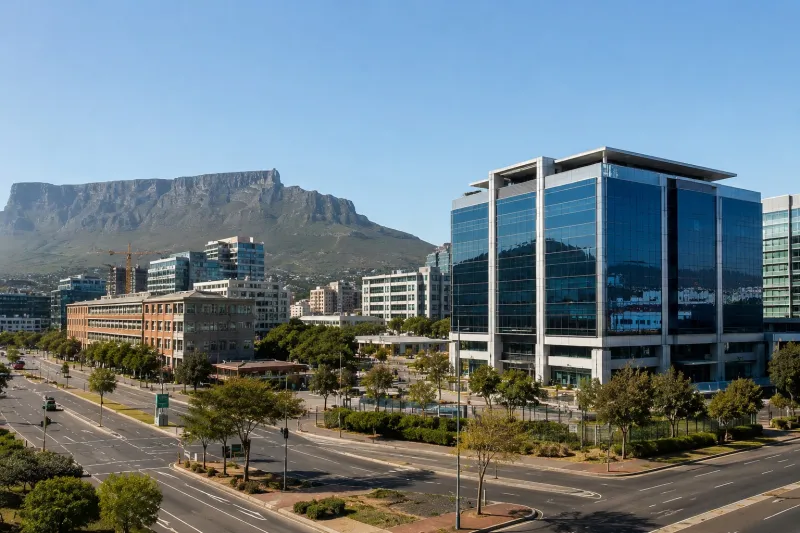

Why South Africa Remains a Key Investment Focus for 2026
Africa’s real estate landscape continues to evolve in 2026, shaped by urbanisation, demographic growth, infrastructure development, and increased cross-border investment. Among African markets, South Africa remains one of the most mature, transparent, and data-rich property environments, attracting both domestic and international investors seeking income-generating assets and long-term value.
Despite economic and political complexities, property fundamentals in key South African cities show resilience, particularly in residential, logistics, and mixed-use developments.
South Africa’s Property Market: A Snapshot for 2026
South Africa stands apart in Africa due to its well-established property finance system, formal title deed registry, and regulated real estate sector. These structural strengths continue to support investor confidence in 2026.
Key drivers influencing the market include:
- Urban population concentration in major metros
- Ongoing demand for rental housing
- Growth in logistics and industrial property linked to regional trade
- Lifestyle-driven residential demand in coastal and secondary cities
While price growth varies by location, rental demand remains a stabilising force across many segments.
Residential Property Trends: Lifestyle and Location Matter
In 2026, residential performance in South Africa is highly location-specific. Lifestyle-driven markets are outperforming national averages, particularly in areas offering security, infrastructure, and reliable services.
Cities and regions attracting strong buyer interest include:
- Cape Town, supported by semigration, tourism, and international demand
- Western Cape coastal towns, benefiting from remote work trends
- Secure estates and sectional title developments in major metros
- Student accommodation hubs near major universities
Rental demand remains robust, driven by affordability constraints for first-time buyers and continued urban migration.
Commercial and Industrial Property: Logistics Leads the Way
South Africa’s commercial property sector continues to adjust post-pandemic, with industrial and logistics assets outperforming traditional office space.
Key trends shaping 2026 include:
- Increased demand for warehousing and distribution centres
- Growth in last-mile logistics supporting e-commerce
- Consolidation and repurposing of older office stock
- Stable demand for neighbourhood retail anchored by essential services
Industrial properties near major transport routes, ports, and logistics corridors are among the most sought-after assets.
Foreign Investment and Ownership Considerations
South Africa remains open to foreign property ownership, with no blanket restrictions on non-residents purchasing residential or commercial real estate. Foreign buyers are typically required to comply with exchange control regulations when transferring funds into the country.
In 2026, South Africa continues to attract:
- African diaspora investors
- Lifestyle buyers from Europe and the Middle East
- Long-term investors seeking yield rather than speculative price growth
Clear property rights and established legal frameworks remain key advantages compared to many emerging markets.
Yields, Affordability, and Risk Management
Compared to many global cities, South Africa offers relatively attractive rental yields, particularly in well-located residential and industrial assets. However, investors in 2026 are increasingly focused on risk management.
Important considerations include:
- Load shedding and infrastructure reliability
- Municipal service delivery and local governance
- Security and estate management quality
- Insurance and maintenance costs
Investors prioritising professionally managed developments and energy-resilient properties are better positioned for long-term stability.
Africa Beyond South Africa: Regional Context
While South Africa remains a gateway market, other African property hubs are gaining attention in 2026, including:
- Kenya (Nairobi residential and mixed-use developments)
- Nigeria (Lagos high-end residential and commercial hubs)
- Egypt (large-scale master-planned communities)
- Morocco (tourism-driven residential markets)
South Africa, however, continues to serve as a benchmark for market transparency and institutional-grade real estate on the continent.
Outlook for 2026 and Beyond
South Africa’s property market in 2026 is defined by selective opportunity rather than broad-based growth. Investors who focus on location quality, rental fundamentals, and asset resilience can still find compelling value.
As Africa’s urban population continues to expand and regional trade networks strengthen, South Africa’s established property ecosystem positions it as a critical anchor within the continent’s broader real estate narrative.
Writer focused on delivering informative, accessible content