
Dubai’s real estate market has drawn $40.4 billion in foreign property investment, underscoring how the emirate continues to convert international demand into capital inflows. Buyers are weighing lifestyle, yields, and long-term residency options against a backdrop of improving global travel and a broad shift toward “safe-haven” cities. The result is a market where prime districts, off-plan launches, and income-generating rentals are increasingly shaped by cross-border decisions rather than purely domestic cycles.
After several years of rapid price gains and record-breaking transaction volumes, Dubai’s property market is showing clearer signs of cooling. The shift is less about a sudden reversal and more about investors recalibrating expectations as financing costs, new supply, and changing rental dynamics alter the risk-reward equation. For buyers, sellers, and developers alike, the next phase looks defined by selective demand, stricter underwriting, and a stronger focus on fundamentals than momentum.
UAE property markets have entered 2026 with notable momentum, supported by population inflows, resilient tourism, and ongoing capital formation across the federation. Yet beneath the strong headline demand, Dubai is moving into a more delicate phase: a large development pipeline is converging with affordability constraints and shifting buyer preferences, raising the risk of localized oversupply. The result is a market that still looks healthy at the top level, but increasingly requires investors, developers, and lenders to differentiate by location, asset quality, and delivery timing.

Dubai’s property market is posting record transaction volumes and eye-catching price gains, but the story is bigger than one city. Across the world, real estate has expanded into a roughly $393 trillion asset class, shaped by demographics, capital flows, inflation hedging, and evolving lifestyles. Dubai offers a concentrated view of these forces: a highly liquid investment hub where policy choices, international demand, and new development pipelines amplify trends visible across global housing, commercial property, and alternative real estate.
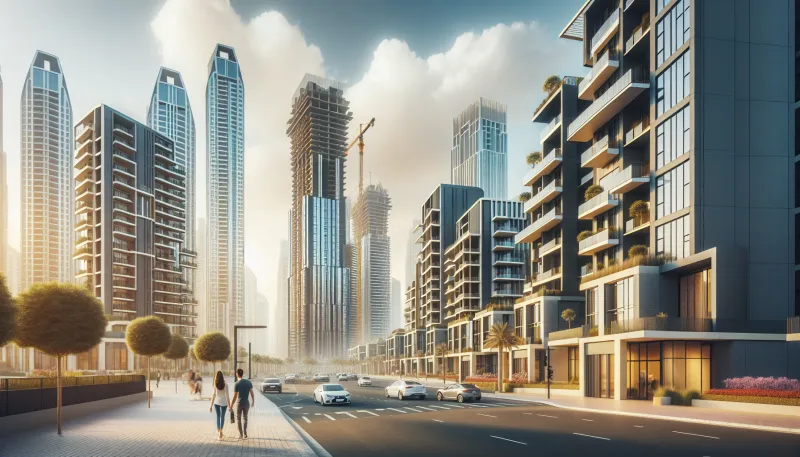
Dubai’s housing market is still busy—but it’s starting to behave like a grown-up. Completions are picking up, off-plan sales remain dominant, and rent growth has cooled from the breakneck pace of 2022–24. Several researchers now flag “moderation” across select communities, even as overall demand stays firm.