

Global real estate is entering a period of short-term pressure as investors and occupiers reassess risk in a world marked by intensifying geopolitical friction, uneven economic growth, and still-restrictive financing conditions. While long-term property fundamentals in many markets remain supported by urbanization, demography, and the modernization of logistics and workplaces, the near-term outlook is shaped by higher risk premiums, slower deal activity, and a renewed focus on resilience, security of cash flows, and asset liquidity.

For years, Gulf property markets—especially Dubai—have marketed themselves as insulated safe havens: politically stable, business-friendly, and geographically removed from regional conflict. Recent missile strikes that rattled perceptions of security are challenging that narrative. The immediate market impact is uneven, but the psychological shift is material: risk is being repriced, deal timelines are stretching, and developers, lenders, and brokers are recalibrating expectations across the region.

Global property insurance pricing declined by an estimated 9% in 2026, marking a clear shift from the hard-market conditions that defined much of the early 2020s. With more capacity available, improved reinsurer appetite, and stronger insurer balance sheets, buyers in many regions are seeing broader coverage terms, higher limits, and more aggressive competition—though the extent of relief varies widely by risk quality, catastrophe exposure, and loss performance.
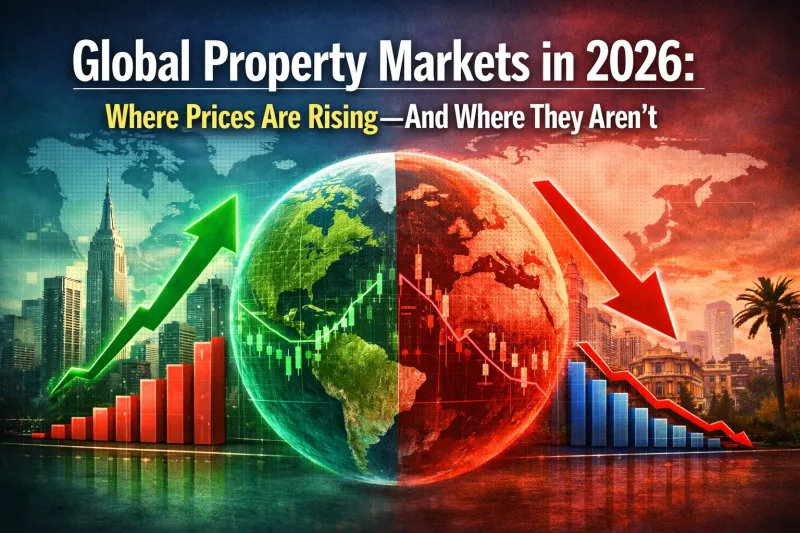
In 2026, global housing markets are moving in different directions at once: some are reflating on the back of rate cuts and tight supply, others are stuck in low-growth limbo, and a few are still digesting the excesses of the pandemic boom. The biggest drivers are familiar—interest-rate paths, inventory, household income growth, and migration—but their mix varies sharply by region. This overview maps the markets showing the clearest price momentum and the ones facing ongoing headwinds, with an emphasis on what is changing now rather than what changed last cycle.

Global real estate capital is traveling faster than ever, chasing yield, stability, lifestyle demand, and clearer rules. In a world of higher interest rates, shifting visa regimes, and uneven economic growth, property investors are increasingly selective about where they deploy funds—often favoring markets that combine liquidity, transparent regulation, and resilient demand drivers such as population growth, tech expansion, or tourism. Below are the countries drawing disproportionate attention, and the practical factors that keep capital moving across borders.

Across countries and income groups, property ownership is being reshaped by the same measurable forces: affordability gaps, interest-rate sensitivity, population aging, urbanization, migration, and new rules on taxes, credit, and land use. While local realities differ, global datasets from housing-price indices, demographic projections, household balance sheets, and transaction records point to a clear direction: ownership will become more polarized—by age, income, and geography—unless supply responsiveness and access to finance improve. Below are ten data-driven lenses that explain where ownership is likely heading and why.
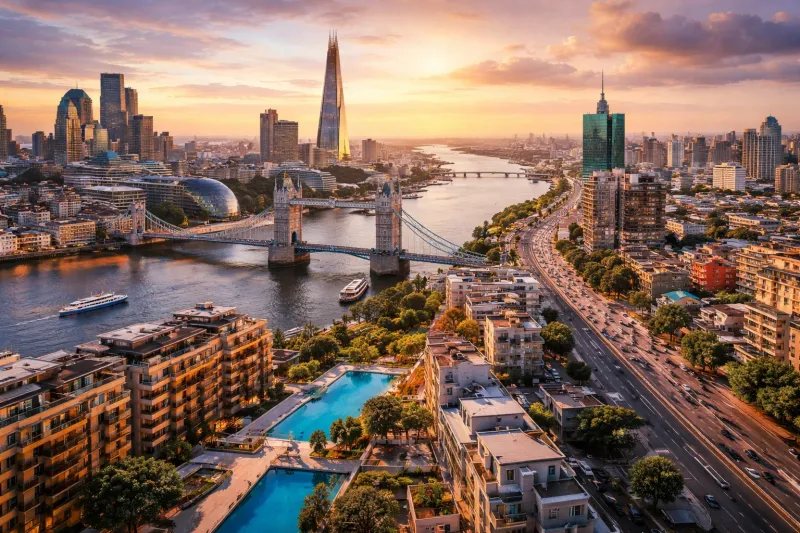
Global real estate demand is being rewritten in real time. Once, a shortlist of “safe” gateway cities dominated cross-border buying; today, capital and ambition are dispersing across new economic corridors, fast-growing secondary hubs, and emerging-market metros where demographics, digitization, and infrastructure are changing the math. From London’s repricing to Lagos’s momentum, the story is less about a single hot market and more about how investors, families, and businesses are rebalancing risk, yield, and lifestyle across a wider map.

As the global real estate market steadies following the volatility of the early 2020s, investors are sharpening their focus on strategic growth regions that offer strong fundamentals, rising yields, and long-term value. 2026 is shaping up to reward diversified, forward-looking property portfolios, from secondary cities in Europe and Africa to tech hubs in North America and lifestyle destinations in the Gulf. Here’s a closer look at the most compelling emerging property hotspots investors can’t afford to overlook this year.
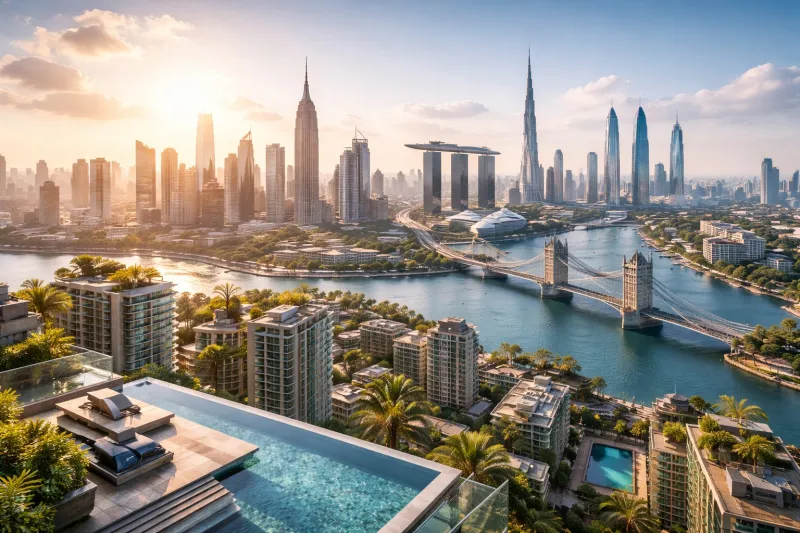
As the global real estate landscape enters 2026, buyers and investors are navigating a market shaped by evolving economic forces, demographic shifts, technology adoption, and changing lifestyle preferences. From sustainability to supply constraints and digital transformation, several key trends are influencing how people approach property decisions around the world.