
Dubai’s record-breaking property market reflects the $393 trillion global real estate boom
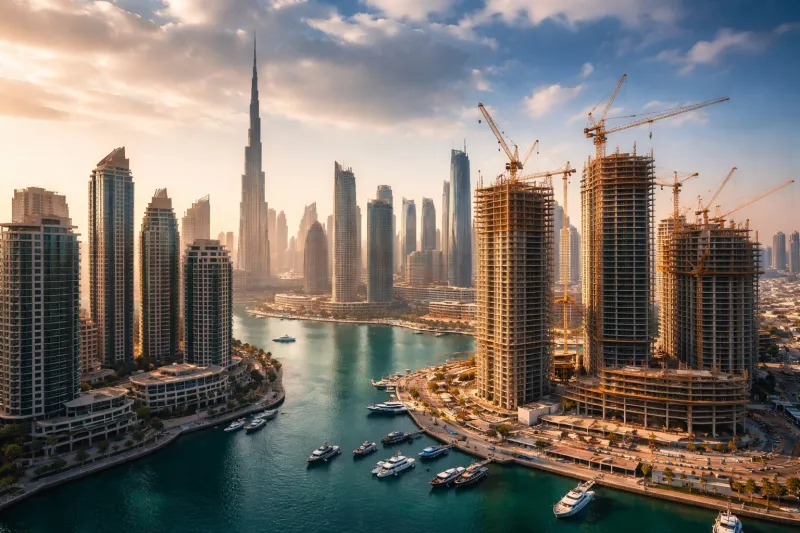
Dubai’s property market is posting record transaction volumes and eye-catching price gains, but the story is bigger than one city. Across the world, real estate has expanded into a roughly $393 trillion asset class, shaped by demographics, capital flows, inflation hedging, and evolving lifestyles. Dubai offers a concentrated view of these forces: a highly liquid investment hub where policy choices, international demand, and new development pipelines amplify trends visible across global housing, commercial property, and alternative real estate.
- A local surge inside a global asset class
- Why Dubai keeps attracting cross-border capital
- The price discovery engine: transactions, transparency, and liquidity
- Interest rates, inflation, and the hunt for real assets
- Population growth, migration, and the premium on livable cities
- Supply pipelines: when building keeps up—and when it doesn’t
- Luxury as a global product: prime property and wealth concentration
- Rental markets, yields, and the return of income discipline
- Policy, regulation, and market confidence
- Risks that come with scale: volatility, leverage, and concentration
A local surge inside a global asset class
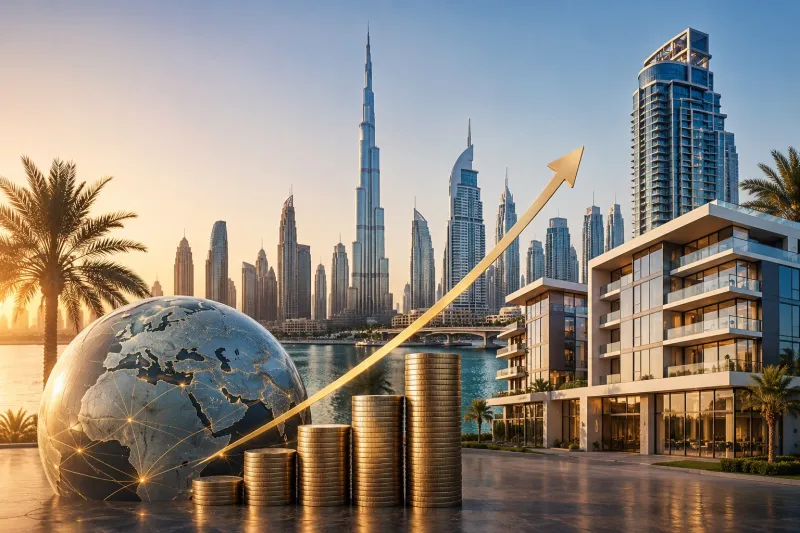
Real estate has overtaken every other asset class as the world’s largest store of wealth at the end of 2024, valued at $393.3 trillion, according to Savills' latest global research. Dubai exemplifies this global trend. The city’s residential real estate market continues to build momentum, with total sales reaching AED 540.1 billion ($147 billion) as of the end of October 2025. This reflects how global capital is being directed toward tangible, income-generating assets, supported by strong investor confidence, mature regulation and sustained international demand.
Why Dubai keeps attracting cross-border capital
Dubai recorded 59,228 residential property transactions in Q3 2025, worth AED 170.7 billion ($46.5 billion), marking the highest quarterly figure ever reported. Total real estate sales have reached AED 559.4 billion year-to-date, already surpassing 2024’s record, according to the latest headlines. Year-to-date residential sales have already crossed the AED half-trillion mark, confirming Dubai’s position as one of the most liquid property markets globally.
The city’s performance reflects a wider shift taking place across global investment portfolios. As uncertainty continues to affect equities and bonds, investors are seeking long-term value in real assets that offer stability and yield. Dubai has benefited from this reallocation of capital, drawing investors who are attracted by its transparent ownership framework, tax-efficient environment and investor-friendly policies.
The price discovery engine: transactions, transparency, and liquidity
Savills’ latest research shows that global property assets have reached $393.3 trillion, representing a 7 per cent increase compared to the previous year. Residential property makes up almost 73 per cent of this figure, followed by commercial real estate at 15 per cent and agricultural land at 12 per cent.
The scale of this value highlights how central real estate has become to the world’s economic and financial systems. It represents not only a store of wealth but also a foundation for stability, employment and long-term investment. Dubai’s record performance provides a clear example of how local markets can reflect the global importance of property as an asset class.
Interest rates, inflation, and the hunt for real assets
Dubai’s accessibility to international investors, efficient regulation and infrastructure-led growth have made it one of the most dynamic property markets in the world. The emirate continues to attract high-net-worth individuals and institutional investors seeking diversification and resilience in their portfolios.
Large-scale development across residential and mixed-use communities has reinforced Dubai’s standing as a global hub for real estate investment. Importantly, the current cycle is supported by genuine demand from both local residents and international buyers, rather than speculative activity. This points to a more balanced and sustainable phase of growth.
Supply pipelines: when building keeps up—and when it doesn’t
Property has become the cornerstone of global wealth creation. As part of a market valued at $393.3 trillion, Dubai’s growth story demonstrates how real estate continues to define investment strategy, capital movement and economic confidence worldwide.
Looking ahead, the outlook for Dubai’s property market remains strong. Continued infrastructure development, a growing population and steady international investment are expected to support demand well into 2026. The city’s foundations of transparency, diversification and innovation will continue to shape its long-term growth and reinforce Dubai’s position as a central player in the global real estate landscape.
Luxury as a global product: prime property and wealth concentration
Prime real estate increasingly trades like a global luxury good. As wealth concentrates, high-net-worth buyers compete for a relatively small set of waterfront, skyline, and branded-residence assets, often paying a premium for uniqueness and status. Dubai has positioned itself strongly in this segment through iconic districts, resort-style communities, and developer-brand partnerships. This mirrors global trends in London, New York, Singapore, and other hubs where prime markets can diverge from local incomes because the marginal buyer is international and the motivation mixes lifestyle, security, and asset allocation.
Rental markets, yields, and the return of income discipline
As financing becomes more expensive worldwide, investors are re-centering on income: sustainable rents, vacancy risk, and operating costs. Dubai’s market has drawn attention for yields that can look compelling relative to many global cities, particularly when demand for rentals rises alongside population growth. But yield is not a static number; it depends on realistic rent growth, service charges, maintenance, and unit quality. The broader lesson of the global boom is that cap rates and rent fundamentals are reasserting themselves as the key check on exuberance.
Policy, regulation, and market confidence
Property booms rarely persist without a foundation of confidence in rules and enforcement. Investor-friendly regulation, clear title systems, and predictable dispute resolution can materially widen the buyer base. Dubai’s ability to attract foreign purchasers is closely linked to the perception that transactions are executable and ownership rights are legible. Globally, policy differences explain why some markets command a “trust premium” while others require higher returns to compensate for uncertainty. For a $393 trillion asset class, these institutional details shape capital flows as much as architecture does.
Risks that come with scale: volatility, leverage, and concentration
Record-breaking activity also raises risk questions. Markets fueled by rapid price appreciation can become vulnerable to shifts in global liquidity, geopolitical shocks, or changes in buyer sentiment. Key stress points include concentrated demand in specific districts, reliance on a narrow buyer cohort, and the interaction between new supply and rental absorption. In the global real estate boom, the most common fault lines are leverage and refinancing risk—when debt maturities collide with higher rates. Dubai’s case underscores the importance of monitoring buyer composition, payment structures, and the balance between end-user demand and investment-driven momentum.
Tommy is a property-passionate journalist who covers the forces shaping housing and the built environment. With a data-driven approach and a reporter’s curiosity, he writes on market cycles, urban development, PropTech, and policy—always connecting numbers to everyday lives. [Name]’s work blends clear analysis with on-the-ground reporting to help readers navigate trends, opportunities, and risks across residential and commercial real estate.