Singapore’s $10M+ property boom: how the city became the world’s luxury real estate hub
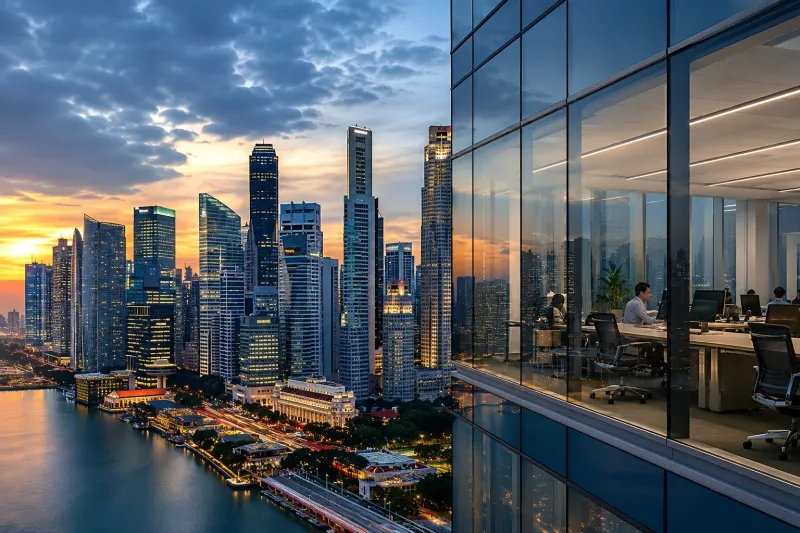
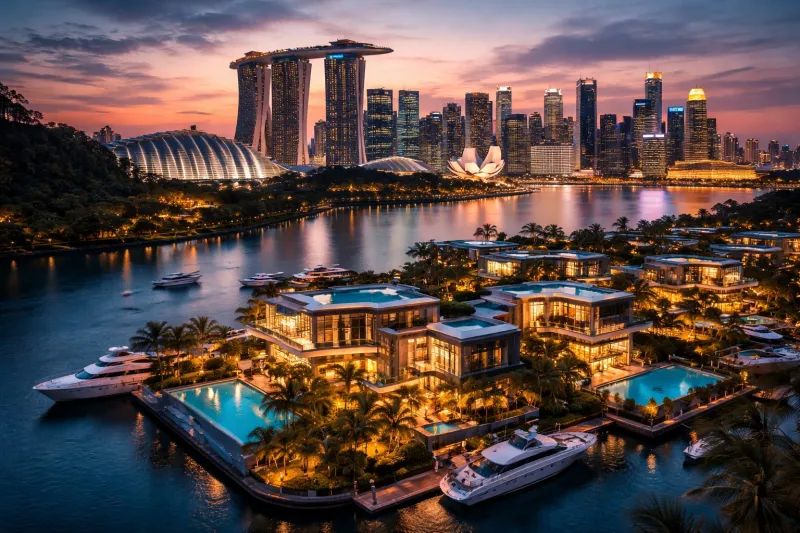
Singapore is rapidly consolidating its position as the global epicenter for $10M+ luxury real estate, drawing ultra-high-net-worth buyers who want more than prestige—they want durability, discretion, and a system that works. A rare combination of political stability, rule of law, deep capital markets, and world-class urban planning is reshaping demand for trophy homes, branded residences, and tightly held prime districts, even as policymakers fine-tune cooling measures to keep the market resilient.
- Why Singapore now leads the $10M+ market conversation
- A safe-haven legal framework that global buyers trust
- Scarcity by design: limited land and tightly held prime stock
- The wealth effect: family offices, private banking, and relocation capital
- Cooling measures that protect long-term credibility
- What buyers pay for: privacy, security, and turnkey quality
- The prestige premium of prime districts and bungalow zones
- Branded residences and hospitality-driven living enter the top tier
- A market built for international mobility and liquidity planning
- What to watch next: supply pipelines, policy shifts, and buyer demographics
Why Singapore now leads the $10M+ market conversation
Luxury real estate at the $10M+ level is increasingly about certainty: certainty of title, certainty of governance, certainty that capital can be deployed and protected. Singapore’s proposition of transparent institutions, sophisticated financial services, and strong personal safety fits the priorities of global buyers navigating geopolitical risk and volatile currency cycles. As wealth becomes more mobile, demand concentrates in a handful of cities that can credibly offer a long-term “safe operating base.” Singapore has moved from being a strong regional option to a first-choice global destination in that short list.
A safe-haven legal framework that global buyers trust
At the very top end, buyers often prioritize legal enforceability over short-term appreciation narratives. Singapore benefits from a well-regarded judicial system, clear property rights, and a regulatory environment that supports cross-border wealth structuring within defined rules. This reduces the “execution risk” that can accompany high-value purchases elsewhere, uncertain titling, opaque ownership histories, or protracted disputes. For $10M+ acquisitions, where due diligence can be as strategic as the asset itself, predictable outcomes are a premium feature.
Scarcity by design: limited land and tightly held prime stock
Singapore’s land constraints make true luxury supply structurally scarce. Prime inventory, especially good class bungalows and top-tier residences in established districts, rarely turns over, and new supply is constrained by planning rules and land availability. That scarcity is compounded by owner profiles: many are long-term holders, meaning stock is not only limited but also illiquid. In practice, this creates a market where the best assets trade infrequently, often off-market, and pricing is supported by the difficulty of replacement rather than speculative churn.
The wealth effect: family offices, private banking, and relocation capital
Singapore’s rise as a private wealth center directly feeds the $10M+ residential segment. Family offices, private banks, and fiduciary services cluster locally, creating a pipeline of buyers who view a high-end home as both lifestyle infrastructure and strategic presence. Relocation trends among executives, entrepreneurs, and multi-jurisdictional families reinforce this demand. For many, the purchase decision is bundled with access to financial expertise, global connectivity, and a stable base for travel across Asia.
Cooling measures that protect long-term credibility
Unlike markets where booms are allowed to run unchecked, Singapore frequently calibrates policy to discourage destabilizing speculation. Additional buyer taxes and financing constraints can reduce froth, but they also signal an institutional preference for sustainability. For ultra-wealthy buyers, this can be reassuring: it suggests the market’s reputation is managed, not merely marketed. While these measures may shift the buyer mix and influence holding periods, they also help preserve Singapore’s image as a place where real estate is underpinned by governance rather than hype.
What buyers pay for: privacy, security, and turnkey quality
At $10M+, the purchase is as much about standards as it is about square footage. Privacy and security matter both physical and informational alongside high-touch building management, resilient infrastructure, and reliable services. Buyers increasingly prefer turnkey finishes, thoughtful layouts for multi-generational living, and amenities that reduce daily friction. In Singapore, luxury is often defined less by extravagance and more by frictionless execution: quiet streets, dependable utilities, and a consistently high baseline of maintenance and governance.
Branded residences and hospitality-driven living enter the top tier
Global luxury buyers are increasingly comfortable with branded residential concepts that combine private ownership with hotel-grade services. Singapore’s positioning as a premium travel and business hub makes it a natural market for this product, particularly among buyers who split time across cities and value consistent service standards. The appeal extends beyond concierge desks: owners want curated experiences, asset-preserving maintenance, and the confidence that management quality will remain high even when they are away.
A market built for international mobility and liquidity planning
For many $10M+ buyers, the home is part of a broader portfolio strategy that includes geographic diversification, succession planning, and contingency options. Singapore’s connectivity, air links, time zone advantages, and business-friendly infrastructure support high-mobility lifestyles. While prime assets may be tightly held, the broader ecosystem enables liquidity planning through professional advisory networks and an informed buyer pool. Owners often weigh not only potential appreciation, but also how efficiently an asset can be managed, financed, or transferred within a long-term plan.
What to watch next: supply pipelines, policy shifts, and buyer demographics
Three forces will likely shape the next phase of Singapore’s $10M+ market:
- Supply discipline: new prime launches, redevelopment opportunities, and how planning rules affect ultra-low-density stock.
- Policy calibration: any refinements to buyer taxes, financing rules, or ownership structures that influence cross-border demand.
- Buyer evolution: a growing mix of entrepreneurs, second-generation wealth, and globally mobile families prioritizing livability and resilience.
As these dynamics unfold, Singapore’s advantage will hinge on maintaining what top-tier buyers value most: predictability, safety, and a consistently high standard of execution across the city.
Writer focused on delivering informative, accessible content