AI, Digital Twins, and Blockchain: Global PropTech Trends to Watch in 2026
The AI Revolution Is Officially Mainstream
Artificial intelligence (AI) continues to be the dominant force transforming property technology in 2026. After years of experimentation, AI tools have moved from niche support roles into core business functions across the global real estate sector. Today, firms increasingly rely on AI for property valuation, market forecasting, automated customer engagement, and transaction workflows bringing deeper insights, faster decisions, and greater efficiency to brokers, developers, and asset managers alike.
AI-powered valuation models, for example, now integrate diverse datasets from historical pricing and neighborhood trends to satellite imagery and environmental risk profiles to produce real-time property price estimates with precision previously unattainable by traditional methods.
Digital Twins & Immersive Experiences Go Beyond Marketing
What was once futuristic is quickly becoming standard: digital twin technology. These detailed virtual replicas of physical buildings fed by IoT sensors and live data streams are now used not just for visualization, but for predictive maintenance, energy optimization, tenant behaviour analysis, and crisis scenario planning. Property managers and developers leveraging digital twins report improved operational performance and tenant satisfaction.
At the same time, virtual reality (VR) and augmented reality (AR) tours are setting new expectations for property browsing. Buyers, investors, and tenants can now explore properties remotely with immersive, interactive walkthroughs that simulate physical presence, enabling global investment decisions without the need for travel.
Blockchain, Smart Contracts & Tokenization Expand Accessibility
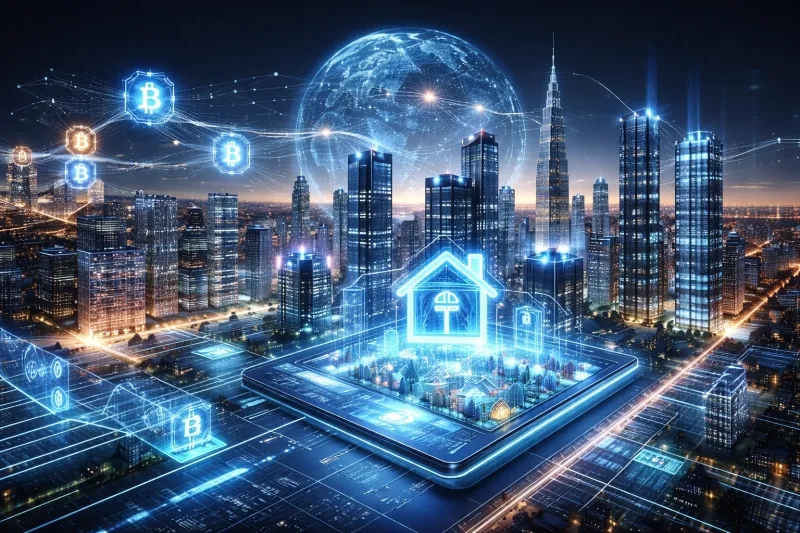
Blockchain continues to disrupt traditional real estate transactions. Smart contracts self-executing agreements stored on decentralized ledgers are shortening closing timelines, reducing fraud risk, and lowering transaction costs. Meanwhile, tokenization is democratizing ownership: by splitting property assets into tradable digital units, investors can participate in markets once reserved for high-net-worth individuals or institutions.
These innovations are particularly significant in emerging markets where access barriers have historically hindered retail investor participation. Tokenized real estate platforms are enabling entry points starting with relatively low capital commitments while still offering liquidity and diversification.
PropTech Market Expansion: Numbers & Forecasts
The global PropTech market is in a robust growth phase. Industry research estimates the market value will grow from around USD 34.4 billion in 2025 to over USD 40 billion in 2026, with expectations of continued acceleration toward USD 168 billion by 2035 driven by broader adoption of digital tenant services, AI analytics, smart building automation, and immersive technologies.
Notably, over 60 % of modern tenants now prefer digitally enabled living and workspace experiences, while nearly half of developers integrate IoT and automated systems into new projects underscoring PropTech’s role in both demand-side and supply-side transformation.
Sustainability & Smart Infrastructure Are Now Core, Not Optional
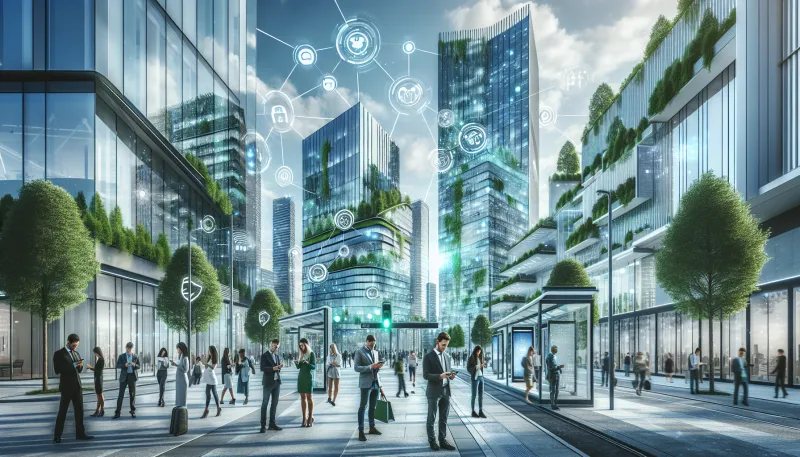
Technology is also accelerating sustainability in real estate. Smart sensors and building management platforms collect real-time data on energy use, air quality, and occupancy, enabling properties to meet stringent ESG (environmental, social, governance) standards. These certifications increasingly translate into higher rents, better occupancies, and stronger investment performance.
PropTech products that couple AI with energy optimization are now used not only to improve tenant experiences but also to reduce carbon footprints aligning real estate growth with global climate goals.
Integration, Automation & the Future of Work in Real Estate
Automation platforms continue to reduce administrative friction in property transactions. Electronic document management, digital signatures, and end-to-end workflow platforms are cutting closing times and freeing professionals to focus on strategic tasks.
In corporate real estate, firms are increasingly looking to create AI-friendly workplaces where data, automation, and tech-driven workflows help turn office space from cost centers into strategic engagement drivers.
What’s Next: Metaverse, Smart Cities, and Convergence
Looking ahead, immersive technologies like the metaverse are poised to interlink physical and digital property ecosystems, opening new frontiers in community engagement, virtual land investment, and hybrid events. Investors and developers have begun experimenting with virtual land auctions and digital twins of real neighborhoods signaling broader fusion between gaming, digital commerce, and real estate.
Meanwhile, major real estate events in 2026, such as the RISE Global Real Estate Investment Summit in Dubai, highlight this intersection of innovation and capital reflecting PropTech’s central role in shaping the future of how we build, buy, manage, and experience real estate.
In 2026, PropTech is no longer an optional add-on. It’s a core pillar of the global real estate ecosystem. From AI-driven analytics and immersive visualization to blockchain transactions and digital twins, technology is accelerating efficiency, transparency, and accessibility across every link in the property lifecycle. As investors, developers, and occupiers embrace these innovations, the global real estate landscape continues to evolve toward a more connected, data-driven, and sustainable future.
Writer focused on delivering informative, accessible content