
Commercial property insurance rates drop 9% in Q4 2025: What it means for buyers, renewals, and risk strategy
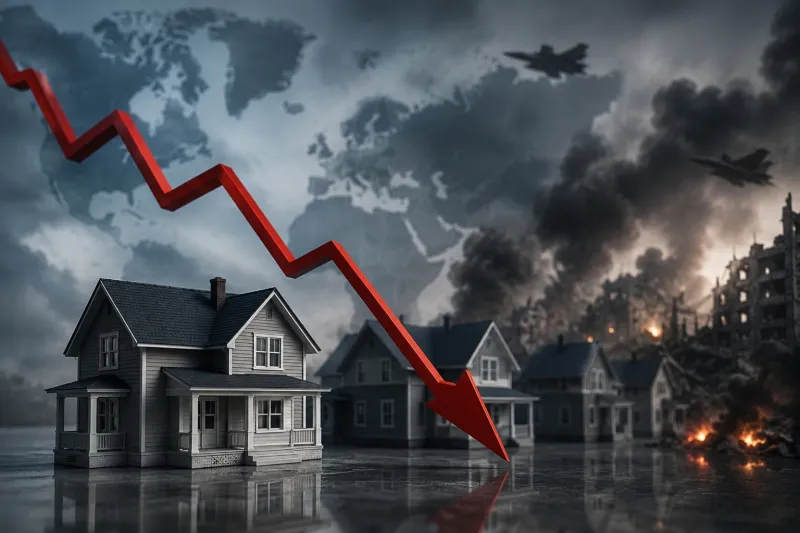
Global commercial property insurance rates fell by 9% in Q4 2025, marking a notable shift in pricing momentum after several years of volatility driven by catastrophe losses, inflation, and capacity constraints. For risk managers, brokers, and CFOs, the headline figure is only a starting point: the real story is how the reduction is distributed across geographies, industries, occupancies, and program structures—and how buyers can translate improved pricing into stronger terms, smarter retentions, and better resilience.
- What the 9% decline signals in market cycle terms
- Key drivers behind the Q4 2025 softening
- Where the reductions are most likely to show up
- Catastrophe exposure remains the key differentiator
- How underwriting scrutiny is changing alongside lower rates
- Implications for policy terms, limits, and deductibles
- What it means for industries with complex property risk
- Negotiation tactics for Q1–Q2 2026 renewals
- How brokers and carriers are repositioning capacity
- Strategic choices: Lock in savings or reinvest in resilience
What the 9% decline signals in market cycle terms
A 9% global decline suggests a market that is increasingly competitive, with insurers pursuing top-line growth and selectively deploying capacity. While property remains sensitive to catastrophe exposure, the quarter’s pricing indicates that many carriers view current rate adequacy as improved relative to expected loss costs, or that portfolio results have stabilized enough to compete more aggressively. In practice, buyers often experience a mix of outcomes: meaningful reductions for well-protected, well-modeled risks, and flat to modest changes where loss activity, high-hazard occupancies, or cat concentration persists.
Key drivers behind the Q4 2025 softening
Several forces can push global property rates down simultaneously. Increased reinsurance availability can lower insurers’ marginal cost of capital, while improved insurer profitability (or a better forward view) can stimulate competition. Another contributor is buyers’ sustained investment in mitigation sprinkler upgrades, roof retrofits, flood defenses, and better maintenance regimes paired with richer data submissions that reduce underwriting uncertainty. The rate decline also reflects program optimization: some insureds have raised deductibles, adopted parametric layers, or expanded captives, lowering the premium associated with traditionally insured risk.
Where the reductions are most likely to show up
Rate decreases tend to be most pronounced for accounts that combine strong risk controls with diversification across locations and perils. Large, well-managed portfolios with robust engineering reports and clean loss runs typically attract additional capacity, which can compress pricing. Conversely, single-site risks, properties with older construction, high values in catastrophe-prone zones, or poor maintenance can still face tougher negotiations. Even in a down market, property remains highly segmented; the “global” figure rarely translates into a uniform experience at renewal.
Catastrophe exposure remains the key differentiator
Catastrophe risk continues to dominate underwriting decisions, meaning outcomes often hinge on modeled loss and aggregation. Locations exposed to windstorms, floods, wildfire, hail, and convective storm patterns can see less benefit from overall market easing, especially if insurers are nearing internal accumulation limits. Buyers with cat exposure can still improve outcomes by tightening catastrophe modeling assumptions, validating construction and protection details, and demonstrating active resilience programs. Underwriters increasingly reward evidence that mitigation projects are completed, verified, and maintained rather than merely planned.
How underwriting scrutiny is changing alongside lower rates
Lower rates do not necessarily mean lighter underwriting. Many insurers are holding firm on data quality, engineering standards, and reporting cadence even as they compete on price. Expect continuing focus on roof age and materials, electrical systems, hot work controls, housekeeping, fire department response, and business continuity planning. The most successful renewals treat pricing as only one lever and position the account as “easy to underwrite” through clear documentation, updated valuations, and transparent disclosure of losses and remediation.
Implications for policy terms, limits, and deductibles
When rates fall, the first visible change is often premium, but the more valuable wins may be in terms and structure. Buyers may be able to negotiate broader coverage grants, improved sublimits, or reduced waiting periods for business interruption. Some will seek to buy back higher deductibles imposed in prior years, while others will keep retentions elevated and use savings to fund risk improvements. The best approach depends on volatility tolerance and the organization’s balance sheet capacity to absorb shock losses.
What it means for industries with complex property risk
Manufacturing, logistics, food processing, chemicals, and real estate portfolios often experience uneven pricing because hazard characteristics vary site by site. Occupancies with combustible dust, high heat processes, cold storage, or critical machinery may not capture the full benefit of a softer market unless risk controls are demonstrably best-in-class. For real estate owners, construction type, tenant mix, and protection features can drive underwriting appetite. In each case, presenting granular data rather than portfolio averages helps underwriters differentiate better-performing locations and price them more competitively.
Negotiation tactics for Q1–Q2 2026 renewals
To convert market momentum into tangible outcomes, buyers should start earlier and run a structured marketing process. Effective tactics include:
- Improving submissions with updated COPE data, valuations, and business interruption worksheets
- Sharing engineering progress with documented completion evidence and timelines
- Testing layers by marketing towers to different lead and follow markets
- Challenging cat assumptions using third-party models or sensitivity analyses
- Benchmarking terms to identify where coverage has quietly narrowed
Even when the premium is decreasing, disciplined negotiation can prevent unfavorable wording from persisting simply because “pricing is good.”
How brokers and carriers are repositioning capacity
As rates decline, brokers typically broaden the market sweep to create competition not only on price but also on attachments, participation size, and coverage enhancements. Carriers, meanwhile, may deploy more capacity in preferred segments while keeping tight guardrails around cat-heavy zones and challenging occupancies. Buyers should expect underwriters to look for scalable relationships with accounts with strong governance, consistent risk improvement, and potential cross-line opportunities. This environment can reward insureds who can clearly articulate a multi-year risk strategy rather than a one-time renewal objective.
Strategic choices: Lock in savings or reinvest in resilience
A pricing decline opens up strategic options beyond immediate cost reduction. Some organizations will prioritize budget relief, while others will use the opportunity to strengthen resilience and reduce future volatility. Common plays include:
- Funding mitigation (roof upgrades, flood barriers, fire protection modernization)
- Upgrading data quality to reduce uncertainty loads in underwriting
- Rebalancing retentions to align with risk appetite and cash-flow tolerance
- Exploring alternative risk transfer, such as captives or parametric covers for peak perils
In a softer market, the most durable advantage often comes from turning rate relief into measurable risk improvement that stays valuable when the cycle turns again.
Writer focused on delivering informative, accessible content