

Once the default destination for global wealth, London’s prime housing market is now being counted among the weakest performers internationally. Price growth has lagged comparable cities, transaction volumes have thinned, and the buyer mix has shifted as taxes, regulation, and currency dynamics reshape demand. The result is a market that still trades on prestige, but no longer on momentum.

The global housing market, which has experienced years of rapid growth fueled by low interest rates and strong demand, is beginning to show signs of strain. A growing number of analysts and economists are warning that a correction could emerge between 2026 and 2027, driven by rising debt levels, affordability pressures, and shifting economic conditions.

Across commercial real estate, a prolonged period of higher borrowing costs and more selective lending has pushed owners and occupiers to rethink how they fund operations and growth. One structure is moving from niche to mainstream: the sale-leaseback. By selling a property to an investor and leasing it back for long-term use, companies unlock capital while keeping control of mission-critical sites. For investors, these deals offer contractual income and clearer underwriting than many traditional acquisitions—helping explain why volumes are rising as the market recalibrates to tighter liquidity.
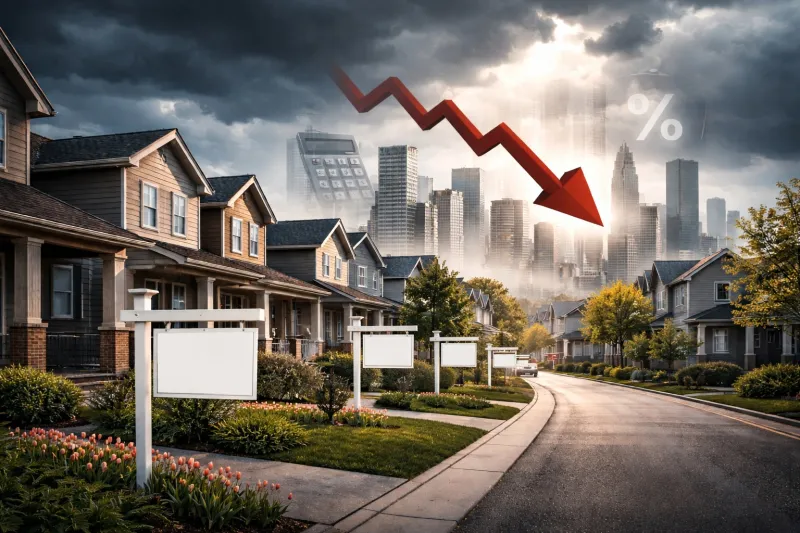
As spring 2026 begins, housing markets across regions are entering the busiest selling season with an unusual mix of momentum and caution. Buyers are watching mortgage rates that may drift lower but remain volatile, sellers are recalibrating expectations after uneven price cycles, and policymakers are balancing affordability concerns against financial stability. The result is a market that still moves, but does so with tighter budgets, more negotiation, and higher sensitivity to headlines.

Across global real estate markets, sentiment is improving even as pricing, policy, and geopolitics keep risk elevated. The latest ULI–PwC signals point to a sector that is stabilizing: capital is returning selectively, underwriting is becoming more disciplined, and investors are widening their opportunity set beyond traditional “core” plays. Resilience is showing up most clearly where income is durable, supply is constrained, and strategies can adapt—through repositioning, operational improvements, and a sharper focus on sustainability and tenant needs.

U.S. REIT Easterly Government Properties is set to spotlight its commercial real estate strategy at the Citi 2026 Conference, drawing investor attention to a niche portfolio built around U.S. government tenancy. The company’s presence at the event puts a timely focus on how defensive leasing, disciplined capital allocation, and asset-level risk management can differentiate performance in an uncertain rate and office-demand environment.

Dubai’s real estate market remains active, but brokers report that completing transactions is taking longer as the wider regional conflict continues to ripple through financial compliance, cross-border payments, and buyer logistics. The impact is not described as a collapse in demand; instead, it shows up in the mechanics of closing: more questions from banks, extra documentation for overseas purchasers, and longer coordination cycles between developers, trustees, and lenders.

AI is pushing real estate brokerage into a new operating model: faster research, more precise pricing, always-on client service, and measurable marketing performance. As proptech adoption accelerates, brokers are not being replaced so much as re-scoped—shifting from manual coordination and information gatekeeping toward interpretation, negotiation, and trust-building. The most competitive firms are redesigning workflows around data, automation, and human expertise, turning the brokerage role into a hybrid of advisor, product operator, and compliance steward.
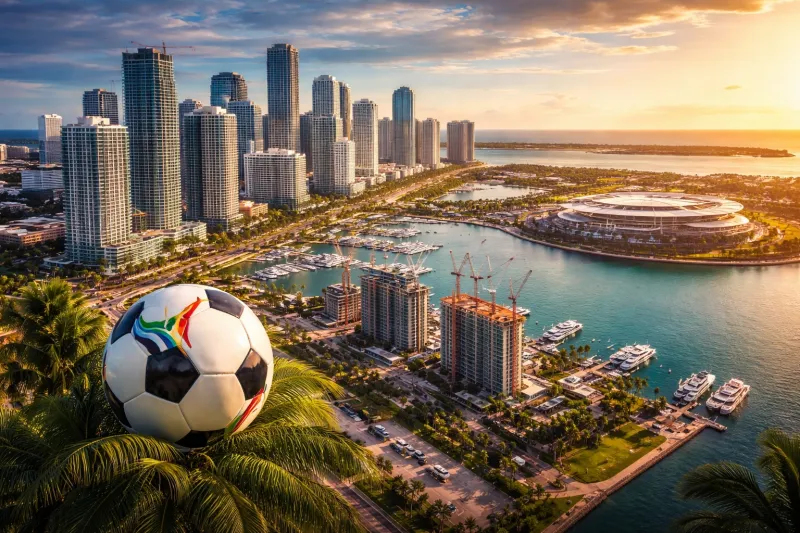
When the 2026 FIFA World Cup comes to the U.S., Miami is positioned to capture a disproportionate share of the economic and cultural spillover—from matchday crowds to media attention and corporate hospitality. Even though games are played at Hard Rock Stadium in nearby Miami Gardens, the region’s tourism corridors, luxury neighborhoods, and development pipeline are tightly interconnected. For buyers, sellers, developers, and renters, the tournament could act as a catalyst that accelerates trends already underway in Miami’s real estate market.