

Bridgepoint’s agreement to acquire Kayne Anderson’s real estate business for $1.4 billion marks a decisive move to scale its global real assets footprint and broaden its product suite. The transaction brings a sizeable U.S.-centric platform into Bridgepoint’s orbit, adding specialist capabilities, long-dated capital, and a larger investor base—while also raising important questions about integration, strategy alignment, and performance in a higher-rate real estate market.

The global luxury property market continues to show notable resilience, even as interest-rate uncertainty, slower growth forecasts, and geopolitical risks reshape mainstream housing. At the top end, however, demand is increasingly driven by high-net-worth individuals (HNWIs) seeking stability, lifestyle, and long-term capital preservation across a set of highly competitive wealth hubs. From prime urban cores to trophy coastal enclaves, pricing power is being supported by constrained supply, cross-border diversification, and a buyer base less dependent on financing.

Across Asia-Pacific, China’s real estate investment trust framework—commonly referred to as C-REITs—is evolving from a domestic capital-markets innovation into a practical toolkit for global property managers seeking liquidity, balance-sheet resilience, and scalable operating platforms. As fundraising conditions tighten in traditional private markets and refinancing risks remain uneven across the region, C-REIT-style structures are increasingly viewed as a way to recycle capital, professionalize asset operations, and align long-duration infrastructure-like real estate with public-market discipline.
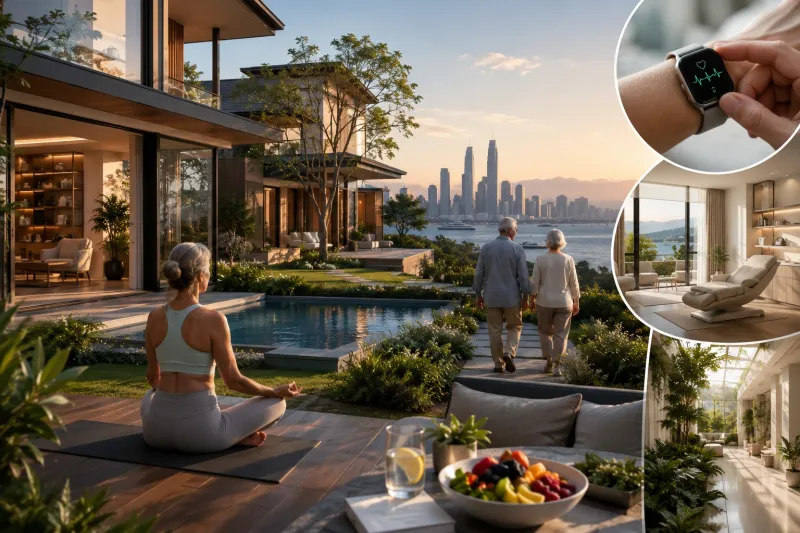
In 2026, longevity-focused living is no longer a niche preference among affluent buyers—it is a central decision filter shaping where, how, and why people buy luxury real estate. Prime homes are increasingly evaluated like personal health platforms: the built environment must support better sleep, lower stress, cleaner air, smarter recovery, and long-term vitality. Developers, brokers, architects, and destination brands are responding with residences and communities that integrate wellness infrastructure, preventative-care ecosystems, and measurable performance features—turning “healthy living” from a marketing claim into a tangible asset class driver.

As interest-rate uncertainty lingers and traditional portfolios struggle to balance growth with downside protection, commercial real estate (CRE) is re-emerging as a preferred asset class for investors seeking higher yields and greater stability. From income-producing logistics facilities to well-located multifamily and essential retail, many CRE segments offer a combination of contractual cash flows, inflation-aware rent mechanisms, and tangible collateral. Yet the opportunity is nuanced: underwriting discipline, tenant quality, and local supply dynamics increasingly determine whether CRE delivers resilient returns.

Against a backdrop of higher borrowing costs, uneven economic growth, and shifting buyer priorities, the global luxury housing market is showing notable staying power. Prime residential values have risen 3.2% worldwide, reflecting demand from affluent buyers who are less rate-sensitive, increasingly internationally mobile, and focused on scarce, high-quality homes in safe, lifestyle-rich destinations. The result is a market defined by selective momentum: some cities are accelerating on tight supply and renewed confidence, while others are recalibrating as policies, taxes, and affordability constraints reshape the top end.

Luxury real estate is being reshaped by a new, health-driven aspiration: living longer, better, and with more independence. “Longevity living” goes beyond wellness spas and gym access; it influences where affluent buyers choose to live, how homes are designed, and which services are bundled into residential communities. From blue-zone-inspired developments to medically integrated residences, the premium is increasingly paid for time, vitality, and resilience—turning longevity into one of the strongest value drivers across global luxury markets.
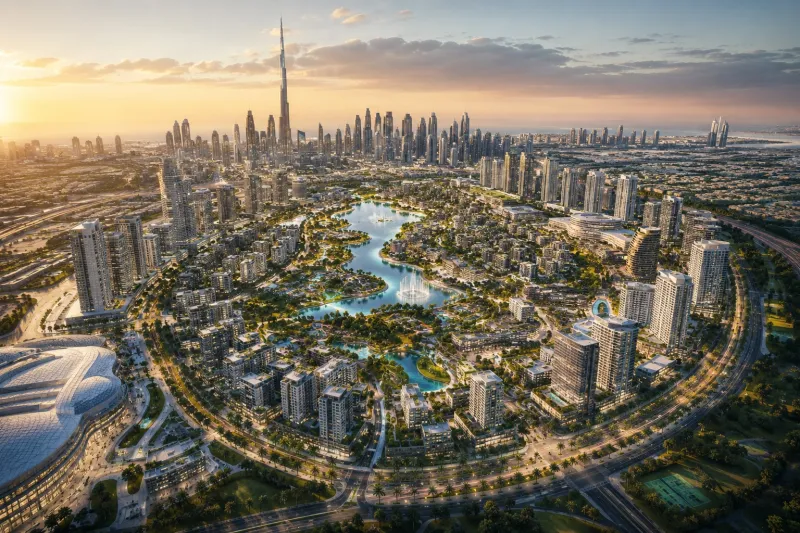
Emaar has unveiled a headline-grabbing $55 billion mega development positioned to reshape how Dubai grows—physically, economically, and socially. Beyond record-setting numbers, the announcement signals a strategic push toward integrated districts that combine housing, jobs, mobility, public space, and destination retail into a single, master-planned ecosystem. If executed as described, the project will influence everything from land values and infrastructure priorities to the city’s skyline and daily commuting patterns.

Across global real estate markets, the UAE is increasingly positioned as a first-choice destination for cross-border capital. Investors are responding to a combination of macro stability, clear rulemaking, modern infrastructure, and a regulatory ecosystem that has matured quickly—especially in Dubai and Abu Dhabi. As other markets contend with policy uncertainty, financing volatility, and slow permitting, the UAE’s predictable operating environment and pro-investor reforms are reshaping global property allocation decisions.