Australia’s home price boom cools: Growth hits a four-year low as rates bite
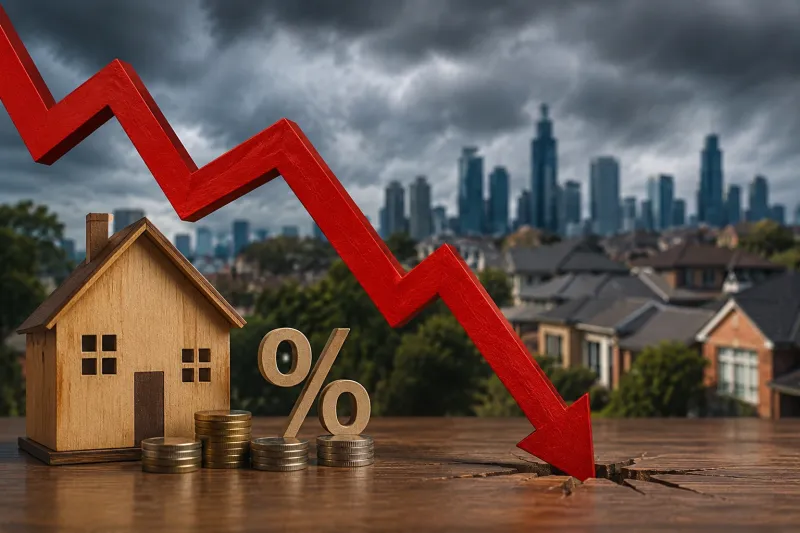
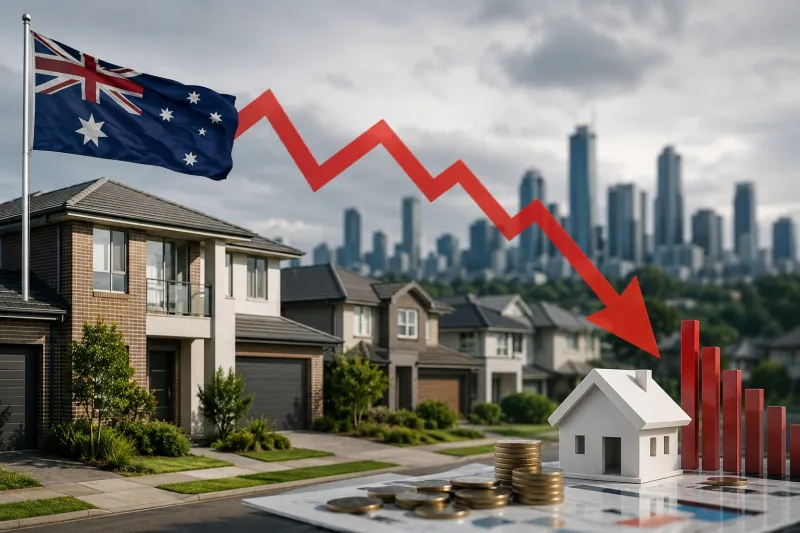
Australian home price growth has slowed to its weakest pace in four years, as higher interest rates and tighter borrowing conditions reduce purchasing power and cool buyer urgency. While supply constraints and population growth continue to support prices in many suburbs, the market’s momentum is shifting: auctions are less frenetic, discounting is more common, and buyers are prioritising affordability over speed.
- 1. Why price growth is slowing now
- 2. Higher rates shrink borrowing power
- 3. Demand is shifting from urgency to selectivity
- 4. Regional and city-level divergence remains pronounced
- 5. Supply constraints still provide a floor
- 6. Affordability is the central battleground
- 7. First-home buyers face a harder entry point
- 8. Investors are recalibrating as yields and risks change
- 9. What the four-year low means for sellers and pricing strategy
- 10. Signals to watch in the months ahead
1. Why price growth is slowing now
The key driver behind the slowdown is the cumulative impact of higher interest rates on household budgets and loan serviceability. As repayments rise, buyers either lower their price ceiling or step back entirely, reducing competition and stretching selling times. Even where demand remains, it is increasingly segmented: well-located, scarce properties still attract strong interest, while compromised homes (busy roads, poor layouts, deferred maintenance) face sharper pushback.
2. Higher rates shrink borrowing power
Mortgage rates affect housing prices primarily through borrowing capacity. When lenders assess loans at higher servicing rates, the maximum amount a household can borrow often falls materially, without any change in income. That means buyers must either contribute a larger deposit, accept a smaller home, or choose a cheaper location. The result is a market that feels less like a bidding war and more like negotiation, with price sensitivity increasingly setting the tone.
3. Demand is shifting from urgency to selectivity
During faster growth phases, buyers tend to act quickly to avoid being priced out. As growth moderates, that urgency fades. Buyers take more time, request more contract changes, and become stricter on building reports and valuation outcomes. This shift in behaviour can slow prices even without a major fall in headline demand, because the market clears at lower incremental increases. In many areas, the marginal buyer is now comparing repayments, not just the sticker price.
4. Regional and city-level divergence remains pronounced
Australia’s housing market rarely moves in unison. Some capitals and inner-ring areas remain supported by strong labour markets, limited new supply, and lifestyle appeal, while other regions see softer conditions due to affordability ceilings and higher sensitivity to rate changes. This divergence is evident in the way clearance rates and vendor discounting vary by suburb. In practice, national “four-year low” growth can hide outcomes ranging from near-flat performance to pockets of resilience.
5. Supply constraints still provide a floor
Even with slower growth, housing supply remains a major constraint. New construction has faced cost pressures, labour shortages, and project delays, limiting the flow of additional dwellings. Listings can also be restrained when potential sellers hesitate to give up low fixed-rate mortgages or worry about buying back into an expensive market. This keeps available stock tight in many suburbs, supporting prices and preventing a rapid unwind. Slower growth, in this context, reflects weaker demand against a still-constrained supply base.
6. Affordability is the central battleground
Affordability pressures are now shaping almost every decision in the market. Households are weighing repayments against other essentials and factoring in ongoing cost-of-living increases. Many buyers are making trade-offs:
- choosing smaller dwellings or apartments over detached homes
- moving further from CBDs or transport hubs
- prioritising energy efficiency and lower running costs
- seeking turnkey homes to avoid renovation financing
These shifts can reprice demand across segments, pulling some areas up while capping others.
7. First-home buyers face a harder entry point
First-home buyers are often the most rate-sensitive cohort because they typically have smaller deposits and less financial buffer. Higher rates can push them below serviceability thresholds or force them into lower price brackets, intensifying competition in the most affordable segments. At the same time, assistance schemes and family support can keep some demand active, but the overall environment is more challenging: the deposit hurdle feels larger, and repayment risk is more salient. Where first-home buyers retreat, transaction volumes can cool quickly.
8. Investors are recalibrating as yields and risks change
Investors weigh housing differently from owner-occupiers, focusing on rental yields, financing costs, vacancy rates, and capital growth expectations. Higher interest rates increase holding costs, prompting some investors to demand stronger yields or reduce exposure. Yet tight rental markets can partially offset this by lifting rents, improving gross yields in some areas. The investor response is therefore mixed: some exit due to cash-flow strain, while others target suburbs where rental demand is robust and supply is limited.
9. What the four-year low means for sellers and pricing strategy
In a slowing growth environment, pricing discipline matters more. Sellers can no longer assume competitive bidding will rescue an ambitious asking price, particularly for properties with obvious drawbacks. Many agents will counsel a strategy built around:
- realistic reserve setting to keep bidders engaged
- strong presentation and minor repairs to reduce buyer objections
- clear communication on settlement flexibility
- data-backed comparisons to justify expectations
Where sellers remain anchored to last year’s peaks, discounting and longer time-on-market become more likely.
10. Signals to watch in the months ahead
Whether price growth stabilises, slows further, or re-accelerates will depend on how financing conditions and household confidence evolve. Key signals include auction clearance rates, the volume of new listings, vendor discounting, and credit growth. Buyers will also watch employment trends and inflation prints, since they influence rate expectations. On the ground, the clearest tell is often transactional: fewer multiple-offer situations, more subject-to-finance clauses, and a growing gap between initial vendor expectations and final sale prices.
Writer focused on delivering informative, accessible content