
Australia’s housing market cools as Sydney and Melbourne set the pace for price corrections
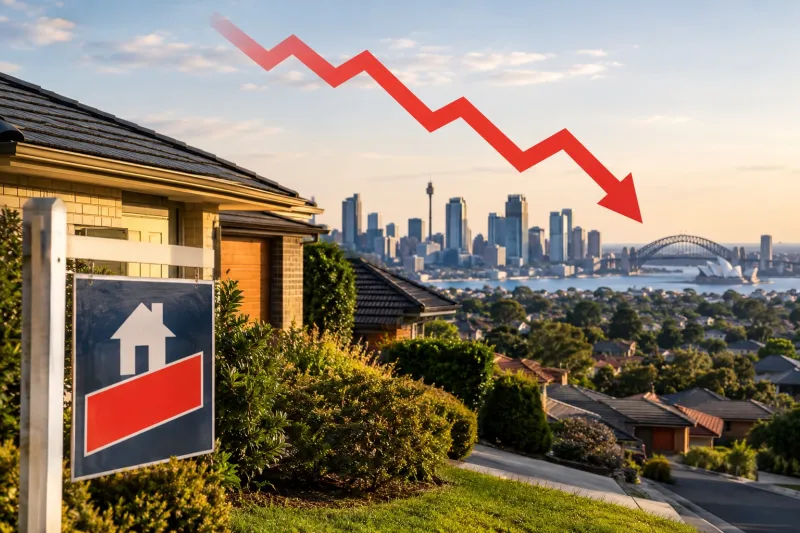
After years of outsized gains and rapid swings in borrowing conditions, Australia’s housing market is shifting into a cooler phase. The most visible changes are emerging in Sydney and Melbourne, where prices are correcting faster than in many other capitals as buyers become more rate-sensitive, listings rebuild, and vendors adjust expectations. While the downturn is not uniform, the balance of power is gradually moving away from sellers in several key segments.
- From rebound to recalibration
- Why Sydney is correcting first
- Melbourne’s softer demand profile
- Interest rates and borrowing capacity as the main lever
- Listings, vendor expectations, and the return of choice
- Auction dynamics signal changing momentum
- Units versus houses: different correction paths
- Rentals, yields, and investor behaviour
- What this means for first-home buyers and upgraders
- Risks to watch: employment, credit, and policy signals
From rebound to recalibration
The recent cooling follows a period in which housing values rebounded strongly after earlier declines, supported by population growth, tight rental markets, and limited supply. That rebound has now given way to a more cautious environment as affordability ceilings are tested and households reassess budgets. In practice, this recalibration shows up as longer selling times, more price negotiations, and a higher share of listings requiring discounts before attracting serious bids.
Rather than a single national story, the shift is best understood as a set of city-by-city adjustments, with Sydney and Melbourne leading the turn due to their higher price levels and greater sensitivity to interest-rate movements.
Why Sydney is correcting first
Sydney’s correction reflects a combination of stretched affordability and a buyer cohort that is acutely exposed to financing costs. With higher median prices than most capitals, even modest changes in mortgage rates can translate into large changes in borrowing capacity. As that capacity tightens, buyers often respond by either lowering their price expectations or stepping down in location and dwelling type.
Vendors, meanwhile, are being forced to meet the market. Where last year’s comparable sales anchored expectations, current buyers are demanding clearer value, especially for homes that need renovations or sit in less-connected suburbs.
Melbourne’s softer demand profile
Melbourne is also leading the cooling, though for slightly different reasons. Demand has been tempered by a larger pipeline of new dwellings in certain corridors and a more uneven premium segment compared with Sydney. In some inner and middle-ring areas, buyers have a wider choice set, which shifts negotiation leverage toward those willing to wait and compare.
Price corrections in Melbourne can also be more pronounced where properties compete directly with newer stock. When buyers can choose between an older home requiring upgrades and a newer alternative nearby, the price gap becomes harder to justify in a high-rate environment.
Interest rates and borrowing capacity as the main lever
The most consistent driver of cooling is the relationship between interest rates and borrowing capacity. Higher rates reduce the maximum loan size for many households, and banks’ serviceability assessments magnify that effect. Even when buyers’ incomes rise, repayments on a given loan remain materially higher than in the ultra-low-rate period, which restrains how far prices can run.
This pressure tends to be strongest in markets where prices are already elevated and households need larger loans to participate. That is why Sydney and Melbourne, with their higher entry costs, are often first to show corrections when conditions tighten.
Listings, vendor expectations, and the return of choice
Another feature of a cooling market is the gradual rebuilding of listings. When more properties come to market, buyers regain the ability to be selective. This doesn’t require an oversupply; it only requires a shift from scarcity-driven urgency to a setting where missing out is less common.
As choice returns, vendor expectations become a pivotal factor. Homes that are priced to last season’s peak can sit unsold, while those that acknowledge current financing constraints tend to attract stronger early interest. Increasingly, the spread between an aspirational asking price and an achievable selling price is determining how quickly transactions occur.
Auction dynamics signal changing momentum
In Sydney and Melbourne, auctions provide a real-time gauge of sentiment. A cooler market typically shows itself through fewer registered bidders, more cautious opening offers, and a higher share of properties passing in. Even when clearance rates remain reasonable, the intensity can fade, with winners paying less of a premium over reserves.
For buyers, softer auction conditions can create opportunities to negotiate post-auction. For sellers, it increases the importance of realistic reserves and strong preparation, because the market is less forgiving of overpricing or presentation issues.
Units versus houses: different correction paths
Correction patterns can differ materially between houses and units. Detached homes, especially in established suburbs with strong school zones and transport links, may hold value better due to persistent scarcity of land. However, their higher absolute prices mean they are also more exposed to rate-driven borrowing constraints.
Units can experience a different trajectory. In some areas, improved rental yields and affordability relative to houses can support demand. In others, where new supply is concentrated, unit prices can face added competition. The result is a patchwork in which both segments can cool, but for different reasons and at different speeds.
Rentals, yields, and investor behaviour
Tight rental conditions have been a counterweight to falling prices, particularly where rents are growing faster than mortgage repayments. Higher yields can lure investors back, but the calculus is more complex than in prior cycles. Investors now weigh:
- Net yields after strata, maintenance, and land tax considerations
- Financing costs and the likelihood of rates staying elevated
- Regulatory and insurance costs that can erode returns
- Liquidity risk if resale conditions soften further
In Sydney and Melbourne, investors may focus on well-located units with resilient tenant demand, while remaining cautious about stock that could face sustained supply competition.
What this means for first-home buyers and upgraders
For first-home buyers, cooling prices can improve the chance to enter the market, but the benefit is often partially offset by higher repayments and stricter serviceability checks. The practical advantage may be less about lower monthly costs and more about reduced competition, fewer rushed decisions, and a better ability to include conditions such as building inspections.
Upgraders face a different trade-off. If their existing home sells into a softer market, they may receive less than expected, but they can also negotiate harder on the purchase side. In a correction-led environment, success often depends on timing and the ability to align settlement dates without overextending.
Risks to watch: employment, credit, and policy signals
The depth of any correction in Sydney and Melbourne will be shaped by macro fundamentals. A stable labour market can limit forced sales, while rising unemployment would increase downside risk. Credit availability also matters: if banks become more conservative, price pressure can intensify even without further rate hikes.
Policy signals can shift sentiment quickly. Changes affecting migration, housing supply approvals, tax settings, or first-home buyer support can all influence demand at the margin. In a market already cooling, marginal shifts can have outsized effects on clearance rates, vendor discounting, and the speed at which prices find a new equilibrium.
Writer focused on delivering informative, accessible content