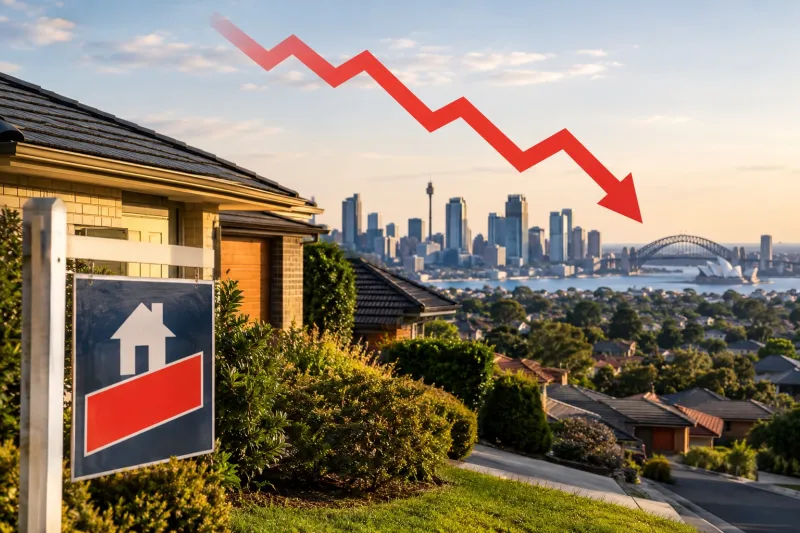

Australia’s housing slump accelerates as prices slide for a fifth month
Australia’s housing downturn is gathering momentum, with national home values falling for a fifth consecutive month and sentiment cooling across major cities. What began as a rate-driven slowdown is increasingly shaped by tighter borrowing capacity, affordability constraints, and shifting buyer expectations—factors that are now reshaping auction dynamics, listing strategies, and the outlook for both households and policymakers.
- A five-month decline signals a broader reset
- Interest rates and borrowing capacity are doing the heavy lifting
- Cities diverge, but the direction is broadly downward
- Listings and buyer sentiment are reshaping negotiations
- Auction metrics are flashing softer conditions
- Affordability constraints are now the central theme
- Investors face a different equation than owner-occupiers
- Construction, supply shortages, and the slow-moving pipeline
- What falling prices mean for household wealth and spending
- Signals to watch next: inflation, wages, and policy settings
A five-month decline signals a broader reset
Five straight months of price falls is more than a statistical blip; it suggests a reset in the balance between buyers and sellers. As borrowing power shrinks and repayments rise, many households are recalibrating what they can pay, while vendors are adjusting to a market where urgency has faded. The cumulative effect is visible in softer clearance rates, longer selling times, and increased willingness to negotiate on price and conditions.
Interest rates and borrowing capacity are doing the heavy lifting
The dominant driver remains higher interest rates, which have reduced maximum loan sizes and pushed monthly repayments to levels that test household budgets. Even where wage growth has improved, it has generally not kept pace with the jump in financing costs, forcing buyers to either reduce their target price range or delay purchases. Serviceability buffers and stricter lender assessments amplify this effect, meaning headline rate rises translate into outsized changes in what banks are willing to lend.
Cities diverge, but the direction is broadly downward
While the downturn is national, its intensity varies by city and suburb. Markets that surged most aggressively during the low-rate period are often seeing sharper pullbacks, particularly where prices had detached from local income growth. In contrast, regions supported by tight listings, infrastructure investment, or relatively resilient employment may experience smaller declines, though few areas are fully insulated from weaker credit conditions.
Listings and buyer sentiment are reshaping negotiations
As confidence cools, buyers are less willing to stretch and more prepared to walk away, which changes the tone of negotiations. Vendors, especially those facing time pressure, are more open to revised offers, longer settlement terms, or price guidance adjustments. The psychology of falling prices also matters: once buyers believe waiting may improve their options, demand becomes more selective and conditional.
- More price revisions after initial campaigns
- Greater focus on building inspections and contract conditions
- Increased interest in private treaty deals over auctions in some areas
Auction metrics are flashing softer conditions
Auction markets typically react quickly to shifts in sentiment, and recent results point to reduced competition. Lower clearance rates often indicate that reserve prices are lagging behind what buyers will pay, leading to pass-ins and post-auction negotiations. When fewer bidders participate and bidding increments shrink, it becomes harder for sellers to achieve premium outcomes, reinforcing the downward drift in comparable sales.
Affordability constraints are now the central theme
Even with prices easing, affordability remains strained in many parts of Australia because repayments rather than purchase prices alone set the practical limit for buyers. Higher mortgage costs mean the same home can be materially more expensive to carry each month than it was a year or two ago. This is pushing demand toward smaller dwellings, outer-ring suburbs, and properties that offer renovation potential at a lower entry point.
Investors face a different equation than owner-occupiers
Investors are weighing softening capital growth against rents that have risen strongly in many markets. For some, rental income growth partially offsets higher interest costs, but yields may still struggle to compensate for elevated financing rates and tighter lending standards. Meanwhile, owner-occupiers tend to focus on long-term utility and stability, yet they too are constrained by serviceability tests and cost-of-living pressures.
Where investor participation falls, it can remove a key source of marginal demand, particularly for apartments and entry-level houses segments that often rely on a mix of first-home buyers and investors to sustain turnover.
Construction, supply shortages, and the slow-moving pipeline
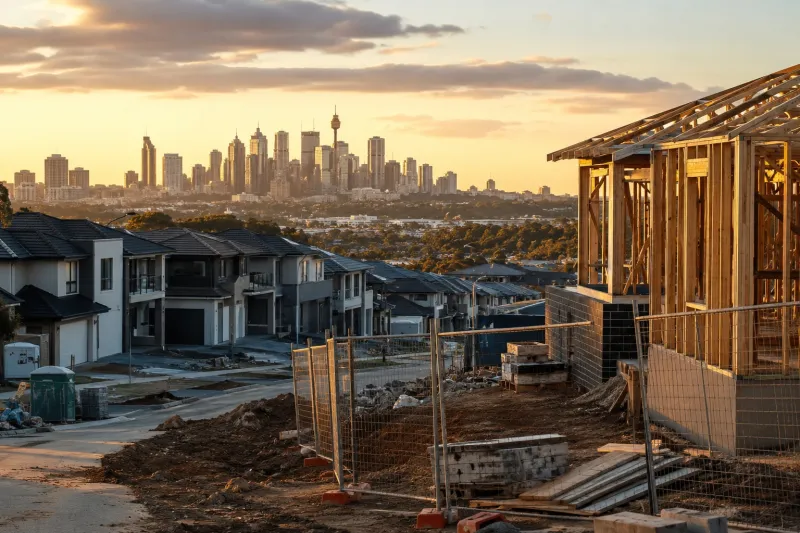
Australia’s housing supply pipeline remains complicated by elevated building costs, labour constraints, and delays that make new supply slower to respond than demand. While a downturn can reduce pressure on prices, chronic undersupply in certain corridors can limit how far values fall, especially where population growth remains strong. The result is a market where prices soften while rental markets stay tight, creating uneven stress across households.
What falling prices mean for household wealth and spending
Housing is central to household balance sheets, so declining prices can influence consumer behaviour through the wealth effect. Even modest declines may encourage higher saving and less discretionary spending, particularly among recent buyers with larger mortgages. This matters for the broader economy because a sustained downturn can dampen retail activity, slow renovation spending, and reduce turnover-related services such as conveyancing, moving, and furnishings.
Signals to watch next: inflation, wages, and policy settings
The next phase of the downturn will depend heavily on the path of inflation and interest rates, as well as labour-market resilience. If inflation proves sticky, restrictive rates may persist, prolonging the squeeze on borrowing capacity. If inflation cools and rate expectations shift, buyer confidence could stabilise, though affordability and lending standards would still cap rapid rebounds.
- Rate guidance and market expectations for cuts or further hikes
- Changes in unemployment and underemployment
- Trends in listings, clearance rates, and time-on-market
- Credit growth and lending standards
Writer focused on delivering informative, accessible content