Australia’s housing market cools as the downturn ripples through the economy
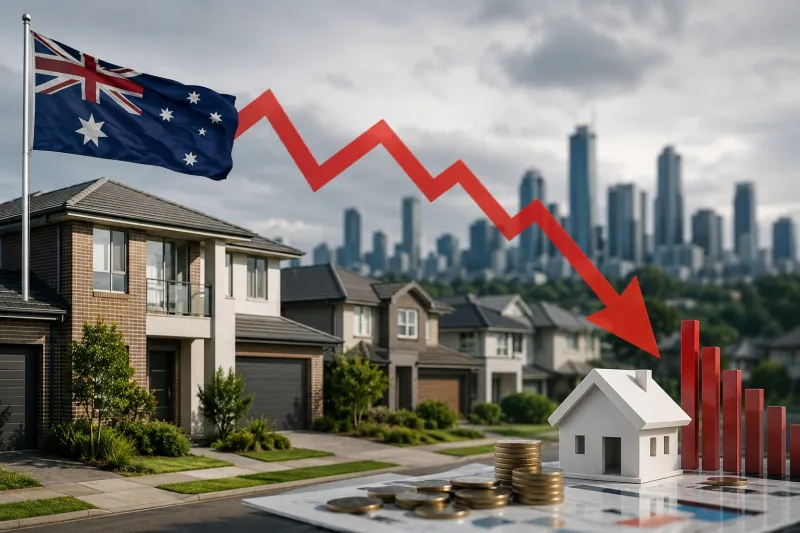
After years of relentless momentum, Australia’s housing market is losing speed. Falling or flat prices in key regions, longer selling times, and softer auction results are reshaping household expectations—and raising questions about what a property downturn means for consumption, construction, and financial stability. With interest rates higher than the ultra-low era and cost-of-living pressures still elevated, housing is increasingly acting less like an engine of growth and more like a potential drag on the broader economy.
- A shift from boom conditions to slower turnover
- Higher borrowing costs reshape affordability
- Price declines and regional divergences
- Auction clearance rates and sentiment indicators cool
- Household wealth effects and consumer spending risks
- Mortgage stress, refinancing, and repayment cliffs
- Construction slowdown and the supply pipeline
- Banks, credit quality, and financial stability questions
- Rent pressures, migration, and the policy trade-offs
- What to watch next in data and decision-making
A shift from boom conditions to slower turnover
Market conditions have moved from the tight, fast-paced environment of the pandemic-era upswing to a more cautious phase. Turnover has slowed as buyers reassess affordability and sellers hesitate to list into softer demand. In many suburbs, the balance has shifted toward negotiation rather than competitive bidding, and listing campaigns are taking longer to convert into sales. The result is a market that feels less liquid, with fewer transactions providing price support.
Higher borrowing costs reshape affordability
Interest rates remain the dominant force setting the ceiling for what households can pay. As borrowing costs rise, maximum loan sizes fall, pushing buyers down the price ladder or out of the market entirely. Even where wage growth has improved, it has struggled to keep up with the combined burden of mortgage repayments, insurance, utilities, and everyday expenses. For many prospective buyers, the affordability challenge is no longer just the deposit; it is the ongoing serviceability of a larger loan at a higher rate.
Price declines and regional divergences
National averages can mask sharp differences across cities and regions. Some markets with strong population inflows and limited new supply have proven more resilient, while areas that saw outsized gains during the upswing are more exposed to pullbacks. Apartments and outer-ring suburbs can behave differently from established inner-city houses, depending on investor participation and local employment conditions. This divergence matters because the economic impact is felt where household leverage is highest and where price weakness is most pronounced.
Auction clearance rates and sentiment indicators cool
High-frequency indicators such as auction clearance rates, discounting levels, and buyer inquiries suggest a cooler environment. When clearances slip and vendors accept larger price reductions, it reinforces a perception that waiting may be rewarded, further dampening urgency. This shift in sentiment can be self-reinforcing: fewer confident buyers reduce competition, which then pressures prices and extends selling times. For policymakers and lenders, these signals help gauge whether the downturn is orderly or at risk of becoming destabilizing.
Household wealth effects and consumer spending risks
Housing plays an outsized role in Australian household wealth, so a downturn can affect behaviour even for people not actively buying or selling. When homeowners see valuations stagnate or decline, they often become more cautious, postponing renovations, cutting discretionary spending, or prioritising debt repayment. The wealth effect is psychological as well as financial, particularly when media coverage intensifies concerns about falling prices. A broad-based pullback in consumption would be significant because household spending is a core driver of economic growth.
Mortgage stress, refinancing, and repayment cliffs
As fixed-rate loans roll off and borrowers refinance at higher rates, repayment burdens can rise sharply. Some households respond by extending loan terms, switching to interest-only arrangements where possible, or cutting spending to stay current. While arrears have generally remained contained, the risk is that pockets of stress widen if unemployment rises or if rates remain elevated for longer than borrowers expect. The distribution of stress matters: highly leveraged recent buyers and lower-income households tend to have less buffer to absorb shocks.
Construction slowdown and the supply pipeline
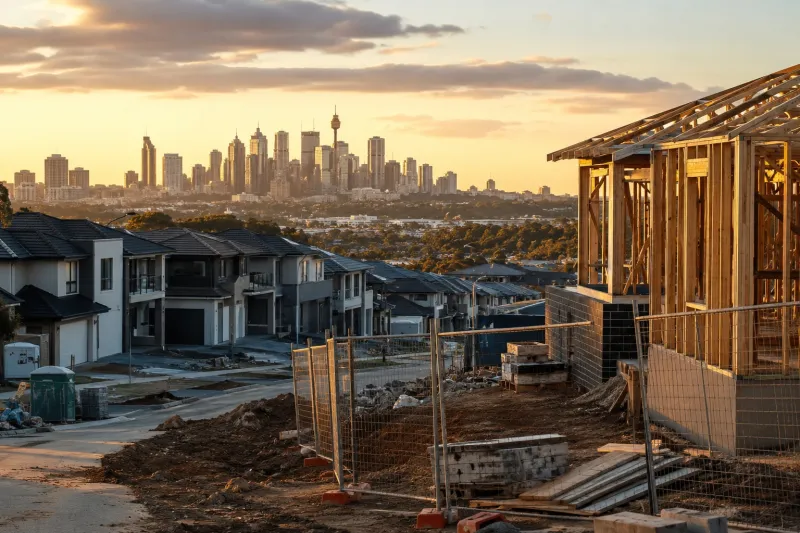
Residential construction is sensitive to both financing costs and buyer confidence. Developers may delay projects if pre-sales weaken or if funding becomes more expensive, while builders face cost pressures from labour shortages and materials volatility. A slowdown in approvals today can translate into tighter supply later, complicating efforts to improve affordability. At the same time, a construction downturn can hit employment and related industries, amplifying the economic impact beyond the property sector itself.
Banks, credit quality, and financial stability questions
Australian banks are heavily exposed to housing, but they also operate with robust underwriting standards and regulatory oversight. Still, a sustained downturn raises questions about credit quality, especially if falling prices coincide with job losses. Negative equity is typically less common when deposits are sizable, yet it can become an issue for buyers who entered near peak valuations with smaller buffers. Lenders are also watching how quickly borrowers adapt to higher repayments and whether hardship requests rise materially.
Rent pressures, migration, and the policy trade-offs
A softening purchase market does not automatically ease rental conditions. Strong population growth, tight vacancy rates, and limited new supply can keep rents elevated, pushing more households into financial strain even as sale prices cool. This creates difficult policy trade-offs: measures that restrain credit growth may help reduce price risks but can also constrain new supply if development becomes less viable. Meanwhile, incentives aimed at first-home buyers can support demand without addressing the fundamental shortage, potentially propping up prices in certain segments.
What to watch next in data and decision-making
The near-term direction will depend on a mix of macro and market-specific signals. Key indicators include:
- Labour market conditions, as unemployment would quickly change default risks and buyer confidence
- Inflation and rate expectations, which set borrowing capacity and sentiment
- Listings and days on market, showing whether sellers are capitulating or holding back supply
- Construction approvals and completions, revealing future supply constraints
- Arrears and hardship trends, indicating whether stress is contained or spreading
For households, investors, and policymakers alike, the interplay between these data points will determine whether the slowdown remains a controlled cooling—or evolves into a broader economic headwind.
Writer focused on delivering informative, accessible content