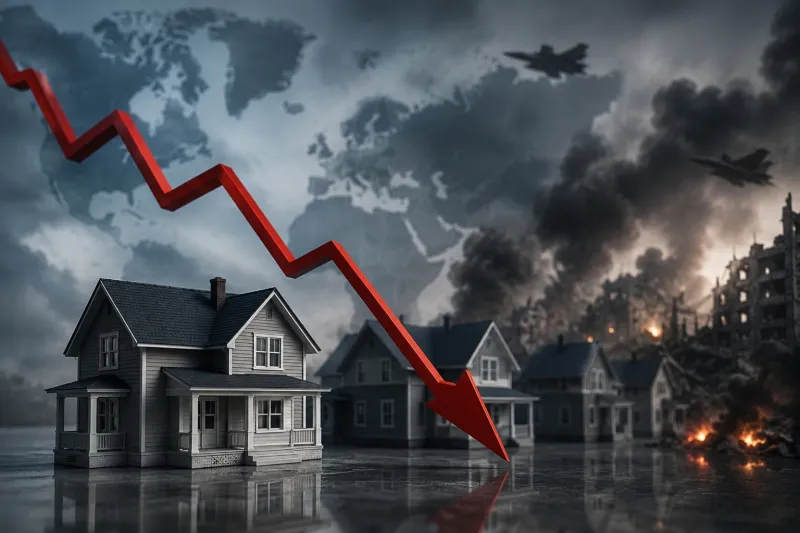

Owners race to sell as property prices show cracks
Across many housing markets, a growing number of property owners are moving from “wait and see” to “sell now.” With higher borrowing costs, cautious buyers, and more listings appearing each week, the fear is shifting from missing out on further gains to being caught on the wrong side of a downturn. The result is a faster, more price-sensitive market where timing, presentation, and realistic expectations matter more than they did during the boom.
- Why sellers are rushing to list now
- Signals that prices may fall further
- Interest rates and affordability are changing buyer behavior
- Inventory is rising and competition among sellers is returning
- Investors and landlords are accelerating exits
- How price cuts are reshaping expectations
- Regional differences are widening
- What homeowners can do to sell quickly without over-discounting
- Risks of selling under pressure and how to manage them
- What the rush to sell means for buyers and the market ahead
Why sellers are rushing to list now
The urgency is being driven by a simple calculation: if prices are drifting downward, selling earlier can preserve equity. Owners who bought recently or refinanced at peak valuations are especially sensitive to small drops, because they have less “buffer” between their mortgage balance and the home’s market value. Even long-term owners, who may have substantial gains, are reacting to headlines about declining transactions and price cuts, choosing certainty over the risk of a softer market later.
In many areas, psychology has flipped. Instead of bidding wars forcing buyers to stretch, sellers are increasingly competing with each other for a smaller pool of qualified buyers. That competition often starts with listing sooner than planned, before more inventory arrives and before comparable sales reset lower.
Signals that prices may fall further
Several indicators are feeding the expectation of further declines. Days on market are rising, and the share of listings with price reductions is climbing, suggesting sellers overshot buyer demand. At the same time, fewer homes are closing above asking price, and appraisals are becoming more conservative as recent comparables weaken.
Another common signal is a widening gap between initial list prices and final sale prices. When that gap expands, it typically reflects a market that is repricing in real time. Buyers insist on discounts to offset higher monthly payments, while sellers who anchor to last year’s peak struggle to meet the new affordability ceiling.
Interest rates and affordability are changing buyer behavior
Higher mortgage rates have reduced purchasing power even where nominal home prices have not yet fallen sharply. A buyer who could previously afford a larger loan at a lower rate may now qualify for significantly less, forcing them to either lower their price range or step out of the market entirely. This shift tightens demand and increases sensitivity to any property perceived as overpriced.
Buyers are also negotiating more aggressively on inspection items, closing costs, and contingencies. Where sellers once dictated terms, today’s buyers often require concessions to make the numbers work. That dynamic reinforces the rush to list: owners hope to sell before concessions become standard and before comparable sale prices settle at lower levels.
Inventory is rising and competition among sellers is returning
As more owners decide to list, inventory builds and choice returns to buyers. Even a modest increase in available homes can change the balance if demand is already constrained by rates and economic uncertainty. In practical terms, this means fewer showings per listing, slower decision-making, and more direct comparisons between similar homes.
Sellers who stand out on price and condition still move relatively quickly, but “average” homes are no longer carried by the market. When multiple comparable properties appear at once, the one that is best priced and best presented tends to set the pace, while the rest are forced into reductions.
Investors and landlords are accelerating exits
Investor-owned properties are often among the first to be listed when markets soften. Some landlords face higher financing costs on variable-rate loans, while others see maintenance and insurance expenses rise faster than rents. If rental yields compress and appreciation is no longer guaranteed, the risk-return profile changes quickly.
In addition, regulatory uncertainty in some cities, such as stricter rental rules or higher property taxes, can push investors to sell preemptively. When a meaningful share of listings comes from investors, local supply can increase rapidly, placing extra downward pressure on prices, especially for condos and smaller units that typically attract buy-to-let buyers.
How price cuts are reshaping expectations
Price reductions have a compounding effect. Each visible cut signals to buyers that the seller is willing to negotiate and that the market may be weaker than the list price suggests. Over time, buyers begin to wait for reductions rather than rushing to secure a home, which slows activity and encourages more cuts.
For sellers, the challenge is that the first adjustment is often the least painful. Homes that start too high can become “stale,” and repeated reductions may lead to lower final offers than a realistic initial price would have achieved. In a declining market, speed and credibility matter: a well-supported price can attract serious buyers before new, lower comparables reset the neighborhood.
Regional differences are widening
Not all markets are moving in sync. Areas that saw the sharpest run-ups during the boom, often fueled by remote-work migration or limited supply, can be more exposed to pullbacks when demand cools. In contrast, regions with steadier job growth, diversified economies, and constrained long-term building pipelines may experience slower declines or even relative stability.
Local factors such as new construction deliveries, major employer layoffs, and demographic trends can outweigh national averages. Sellers who rely on broad headlines may misread their micro-market. In practice, pricing strategy increasingly depends on hyper-local data: the last three comparable sales, current active competition, and the trajectory of pending contracts.
What homeowners can do to sell quickly without over-discounting
Selling quickly in a cooling market does not automatically mean giving away value. It does require tightening the fundamentals: strong presentation, clear disclosures, and a price that aligns with current demand rather than past peaks. Small, high-impact improvements, such as fresh paint, lighting fixes, deep cleaning, and minor repairs, can reduce buyer objections and support a firmer negotiating position.
Smart sellers also structure their offer strategy to reduce friction. Common tactics include:
- Pre-list inspections to identify issues early and prevent renegotiations.
- Targeted concessions (e.g., closing costs) that help affordability without slashing the headline price.
- Flexible closing timelines to attract buyers with specific moving constraints.
These steps can help maintain a credible asking price while still meeting the market where it is.
Risks of selling under pressure and how to manage them
Rushing can create costly mistakes. Some owners accept the first offer out of fear, only to realize later that better terms were possible. Others list without a clear plan for their next housing step, exposing themselves to the risk of selling into a weak market and buying into a still-expensive one, or facing short-term rental costs.
Managing these risks starts with preparation. Sellers benefit from establishing a minimum acceptable net proceeds target, understanding local absorption rates, and mapping out alternative scenarios if the home does not sell within a set timeframe. When emotions run high, decision frameworks rather than headlines help prevent unnecessary discounts and reduce the likelihood of remorse.
What the rush to sell means for buyers and the market ahead
For buyers, a seller-heavy market can open doors: more choices, fewer bidding wars, and improved negotiating leverage. Buyers who remain financially qualified may find opportunities to secure favorable terms, especially on homes that have lingered. However, buyers must still be selective; a growing inventory can include properties listed defensively or due to financial stress, and not every “discount” is a bargain if the area faces further price declines.
For the broader market, the key question is whether the influx of listings is temporary or self-reinforcing. If more owners list because they see others cutting prices, the resulting supply can accelerate the repricing process. If rates stabilize, employment remains strong, and buyers regain confidence, the surge may taper. Either way, the near-term landscape is defined by realism: sellers who price to today’s conditions, not yesterday’s, are the ones most likely to transact.
Writer focused on delivering informative, accessible content