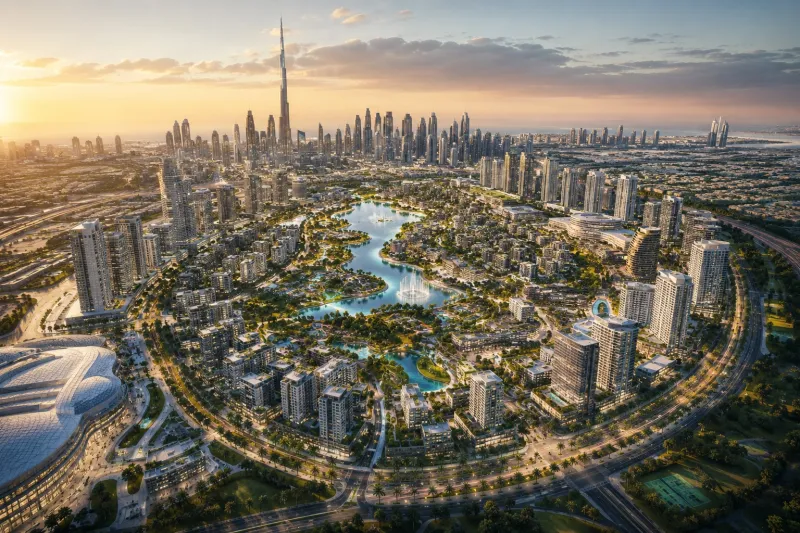

UAE tops global property investment rankings as stability and strong regulation draw investors
Across global real estate markets, the UAE is increasingly positioned as a first-choice destination for cross-border capital. Investors are responding to a combination of macro stability, clear rulemaking, modern infrastructure, and a regulatory ecosystem that has matured quickly—especially in Dubai and Abu Dhabi. As other markets contend with policy uncertainty, financing volatility, and slow permitting, the UAE’s predictable operating environment and pro-investor reforms are reshaping global property allocation decisions.
- Why the UAE is rising in global investor rankings
- Stability as a cornerstone of property demand
- Strong regulation and credible enforcement
- Ownership structures and residency pathways
- Transparency, digitalization, and faster transactions
- Tax efficiency and total cost of ownership
- Infrastructure and master planning as value catalysts
- Demand composition: end-users, expats, and global capital
- Rental yields, liquidity, and the investment case
- Key risks and what sophisticated investors monitor
Why the UAE is rising in global investor rankings
The UAE’s climb in global property investment rankings reflects a straightforward investor calculus: risk-adjusted returns improve when legal clarity, market liquidity, and political stability converge. In practical terms, many buyers see the UAE as a place where transactions can be executed efficiently, ownership rights are clearly defined, and market data is comparatively accessible. This combination supports both long-term capital preservation strategies and more active portfolio trading, particularly in prime residential, branded residences, and high-quality commercial assets.
Stability as a cornerstone of property demand
Stability is not only a macroeconomic concept, but it also directly affects underwriting assumptions such as vacancy risk, tenant durability, and exit liquidity. The UAE benefits from a reputation for continuity in governance and long-term planning, which encourages investors to commit capital over multi-year horizons. For global buyers, that stability reduces the “headline risk” premium that often depresses valuations or constrains leverage in other jurisdictions.
Strong regulation and credible enforcement
One of the most cited reasons for heightened investor confidence is the UAE’s increasingly robust regulatory framework. Real estate oversight bodies have tightened market practices, strengthened escrow and project governance, and improved dispute mechanisms. For investors, the key is not just regulation on paper, but credible enforcement that supports fair dealing and reduces counterparty risk, especially relevant in off-plan purchases and large-scale development transactions.
Ownership structures and residency pathways
The UAE’s approach to ownership and residency has become a significant driver of demand. Clear pathways for long-term residency, alongside established freehold zones, help align lifestyle and investment decisions. This creates a buyer base that is not purely speculative: many purchasers intend to use the asset, relocate partially, or secure a stable base for business and family. That blend of end-user and investor demand can support resilience through market cycles.
Transparency, digitalization, and faster transactions
Digitized land registries, standardized processes, and clearer transaction workflows have helped reduce friction in buying, selling, and mortgaging property. Faster execution matters to institutional and high-net-worth investors who monitor opportunity cost and want predictable settlement timelines. Improvements in market transparency, such as better access to pricing benchmarks and project information, also sharpen underwriting and reduce reliance on informal networks.
Tax efficiency and total cost of ownership
In global comparisons, investors often evaluate not only yields but also the total cost of holding property. The UAE’s generally tax-efficient environment can enhance net returns relative to markets with high recurring property taxes or complex capital gains regimes. While fees and service charges remain important line items, many buyers find the overall cost structure easier to model, which supports clearer long-term return expectations.
Infrastructure and master planning as value catalysts
Large-scale infrastructure investment and deliberate master planning continue to influence where capital flows within the UAE. Connectivity, transit upgrades, new cultural and leisure districts, and logistics corridors can compress commuting times and elevate neighborhood desirability. For property investors, this translates into tangible drivers of rental demand and capital appreciation, particularly in districts positioned to benefit from new transport links or commercial clusters.
Demand composition: end-users, expats, and global capital
The UAE’s demand is diversified across multiple buyer types, which can stabilize pricing during shifts in any single segment. This includes:
- End-users seeking long-term residence and lifestyle amenities
- Expat professionals with high mobility and a preference for quality rental stock
- Regional investors prioritizing capital preservation and proximity
- International buyers are diversifying geographically and currency exposure
A broader demand base can increase liquidity and reduce dependence on short-lived speculative cycles.
Rental yields, liquidity, and the investment case
Many investors are drawn to the UAE’s potential for competitive rental yields alongside a deepening secondary market. Yield appeal is strongest where tenant demand is structurally supported by employment centers, quality schools, and transport access. Liquidity, defined by how easily an asset can be sold at a fair price, has improved in mature districts with consistent transaction volumes, helping investors plan exits with greater confidence.
Key risks and what sophisticated investors monitor
Even in a strong regulatory environment, disciplined investors track risks that can affect performance. Common focus areas include:
- Supply pipeline and potential localized oversupply in specific segments
- Quality dispersion between prime assets and lower-grade stock
- Service charges and long-term maintenance standards
- Financing conditions and interest-rate sensitivity
- Developer execution in off-plan projects
By stress-testing these variables, investors can benefit from the UAE’s stability and regulation while avoiding pockets of volatility within the broader market.
Writer focused on delivering informative, accessible content