Emaar’s $55 billion megadevelopment: A new blueprint for Dubai’s next urban era
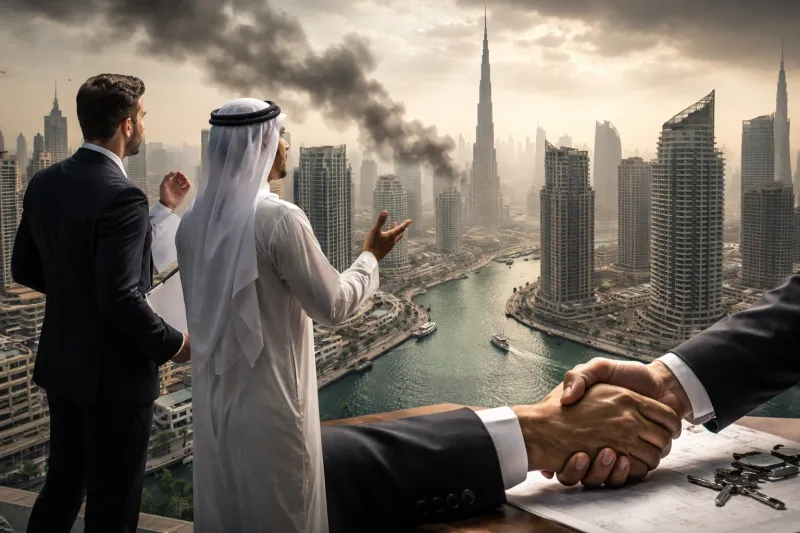
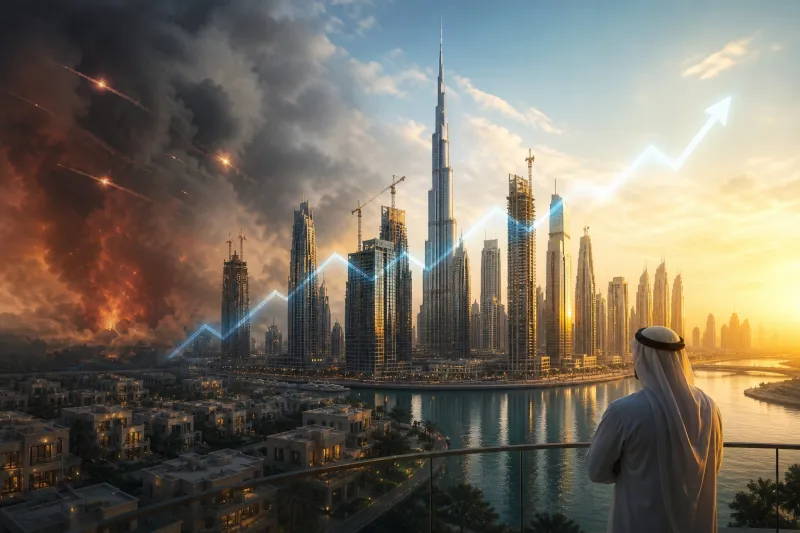
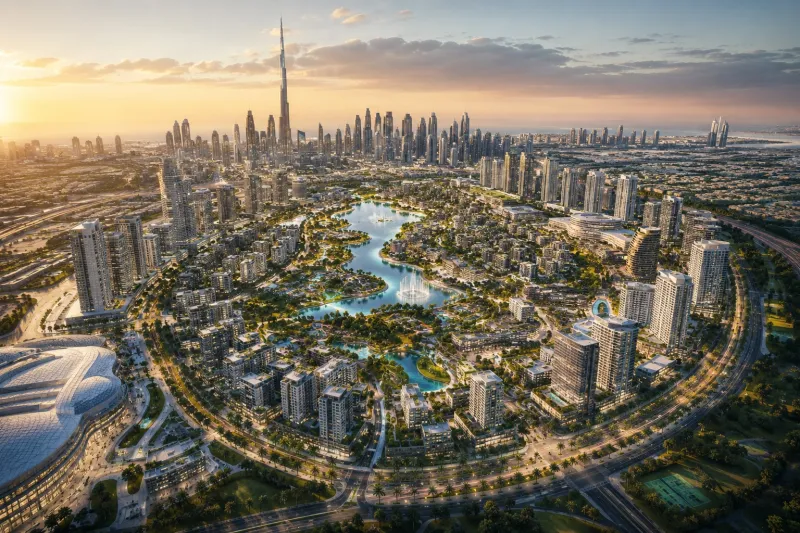
Emaar has unveiled a headline-grabbing $55 billion mega development positioned to reshape how Dubai grows—physically, economically, and socially. Beyond record-setting numbers, the announcement signals a strategic push toward integrated districts that combine housing, jobs, mobility, public space, and destination retail into a single, master-planned ecosystem. If executed as described, the project will influence everything from land values and infrastructure priorities to the city’s skyline and daily commuting patterns.
- What Emaar actually announced and why it matters
- A city-within-a-city approach to master planning
- Economic rationale: Jobs, investment inflows, and multiplier effects
- Housing supply, affordability pressure, and segmentation
- Infrastructure and mobility: The real determinant of livability
- Public realm, placemaking, and the competition for attention
- Retail and lifestyle anchors as demand engines
- Sustainability claims: What stakeholders will scrutinize
- Market timing and risk management in a megaproject
- How it could reshape Dubai’s skyline and growth corridors
What Emaar actually announced and why it matters
The $55 billion scale immediately places the development among the most ambitious urban projects globally, but its significance lies in the intent: a new district-level expansion designed to function as a complete city-within-a-city rather than a single-use enclave. For Dubai, where master-planned communities have become an economic engine, Emaar’s move reinforces a broader model of growth: build high-quality, mixed-use environments, anchor them with lifestyle infrastructure, and connect them to the wider metropolis through road and transit upgrades.
A city-within-a-city approach to master planning
Dubai’s planning DNA favors large, comprehensively designed communities, and Emaar’s proposal follows that tradition with an emphasis on district cohesion. A “city-within-a-city” approach typically means:
- Land-use balance between residential, commercial, hospitality, and civic functions
- Walkable clusters that reduce reliance on car trips for daily needs
- Phased delivery so early residents and tenants get amenities before full build-out
- Clear identity through landmarks, public realm design, and curated retail
In practical terms, success hinges on sequencing: delivering schools, clinics, parks, and neighborhood retail early enough to prevent the area from feeling like a construction zone for years.
Economic rationale: Jobs, investment inflows, and multiplier effects
Megaprojects of this scale are as much economic instruments as they are real estate plays. Construction alone can generate sustained demand across contractors, engineers, materials suppliers, and specialist services. Over the longer run, the development can function as a magnet for:
- Foreign direct investment is tied to residential purchases and commercial leasing
- New business formation in retail, food and beverage, and local services
- Tourism spending is the plan that includes destination experiences and hospitality
For Dubai, which competes globally for capital and talent, a high-profile, well-executed district can strengthen the city’s narrative as a reliable place to deploy long-term investment.
Housing supply, affordability pressure, and segmentation
A key question is how the project contributes to Dubai’s housing supply across price points. Large Emaar communities often include a range of products, such as apartments, townhouses, villas, and branded residences, each targeting different buyer segments. Additional supply can ease pressure in overheated pockets, but outcomes depend on product mix and delivery pace. If the majority of units target premium demand, the project may reinforce luxury segmentation; if mid-market options are meaningful and phased quickly, it could provide broader relief and encourage more stable rental dynamics.
Infrastructure and mobility: The real determinant of livability
Dubai’s next wave of urban growth will be judged less by renderings and more by everyday movement. A district of this size must address capacity and connectivity from day one, including road access, integration with public transport, and last-mile solutions. The strongest plans typically combine:
- Multi-modal corridors that anticipate peak-hour demand
- Transit-ready density around future stations or bus rapid transit links
- Human-scale streets where shade, crossings, and sidewalks make walking realistic
If mobility is treated as an afterthought, even iconic architecture can be undermined by congestion and long commute times, which directly impacts property values and tenant retention.
Public realm, placemaking, and the competition for attention
Dubai’s most successful districts are defined not only by towers or villas but by the quality of their public realm parks, promenades, waterfront edges, and civic gathering spaces. Emaar’s challenge is to create places that feel authentic and repeat-visit worthy in a city saturated with attractions. That means investing in:
- Continuous open-space networks rather than isolated pocket parks
- Mixed programming (play, fitness, culture, events) to keep spaces active year-round
- Comfort design for heat: shade structures, trees, cooling strategies, and water elements
Placemaking is not decorative; it is a revenue driver through footfall, dwell time, and brand strength for both retail and residential components.
Retail and lifestyle anchors as demand engines
Emaar’s track record suggests that retail and lifestyle assets may serve as anchors, stabilizing demand through market cycles. In contemporary mixed-use planning, retail is less about pure storefront quantity and more about curation, experiential dining, entertainment, wellness, and community services that pull people in beyond shopping. A strong anchor strategy can:
- Accelerate absorption for nearby residential launches
- Support office leasing by improving employee experience
- Expand tourism appeal if a signature destination is included
However, the concept must be calibrated to changing consumer behavior, where convenience, experience, and identity outperform generic mall formats.
Sustainability claims: What stakeholders will scrutinize
Any modern mega development will be expected to articulate credible sustainability goals, especially in a climate-challenged region. Stakeholders, buyers, institutional partners, and regulators will look for specifics rather than slogans, such as:
- Energy performance targets for buildings and district cooling efficiency
- Water management, including reuse, smart irrigation, and low-consumption landscaping
- Heat mitigation through materials, shade, and urban geometry
- Construction impacts like waste diversion and lower-carbon materials, where feasible
The durability of Emaar’s sustainability narrative will depend on measurable benchmarks and transparent delivery across phases.
Market timing and risk management in a megaproject
Phasing is the financial backbone of a project of this magnitude. Developers manage risk by aligning launches with demand, preserving land-use optionality, and building infrastructure that supports multiple scenarios. Key risks include construction-cost volatility, interest-rate shifts affecting buyer affordability, and demand cyclicality in both residential and commercial markets. Mitigation typically involves:
- Sequenced neighborhoods that can perform independently
- Product diversification across unit sizes and price points
- Pre-leasing or anchor commitments for major commercial components
Dubai’s market can move quickly, so the ability to adjust unit mix and release schedules can be as important as the original master plan.
How it could reshape Dubai’s skyline and growth corridors
Major Emaar districts tend to reorient the city's gravity, creating new hotspots for living, working, and leisure that influence where infrastructure spending and private investment flow. A $55 billion development can alter:
- Skyline composition through new clusters of high-rise density and landmark architecture
- Growth corridors as surrounding plots appreciate, and secondary projects accelerate
- Competitive positioning among Dubai’s established communities, as amenities and connectivity reset expectations
If the development succeeds in delivering integrated mobility, credible sustainability, and a high-quality public realm, it could become a reference point for how Dubai’s next chapter of urban expansion is planned and marketed.
Writer focused on delivering informative, accessible content