Longevity-first luxury: How health-led living is reshaping global prime property demand in 2026
In 2026, longevity-focused living is no longer a niche preference among affluent buyers—it is a central decision filter shaping where, how, and why people buy luxury real estate. Prime homes are increasingly evaluated like personal health platforms: the built environment must support better sleep, lower stress, cleaner air, smarter recovery, and long-term vitality. Developers, brokers, architects, and destination brands are responding with residences and communities that integrate wellness infrastructure, preventative-care ecosystems, and measurable performance features—turning “healthy living” from a marketing claim into a tangible asset class driver.
- Longevity becomes a primary purchase driver, not a lifestyle add-on
- The home is redesigned as a daily health system
- Preventative health amenities redefine what “full service” means
- Air, water, and light become measurable luxury specifications
- Biophilic design evolves into climate-sheltered nature access
- Longevity infrastructure accelerates demand for privacy and security
- New hotspots rise where medicine, mobility, and lifestyle intersect
- Multi-residence portfolios are built around recovery seasons and circadian alignment
- Developers monetize longevity through services, memberships, and operating models
- Resale value and due diligence now include wellness performance claims
Longevity becomes a primary purchase driver, not a lifestyle add-on
Luxury property demand in 2026 is increasingly guided by a simple question: Will this home help me live better for longer? This shift is visible in buyer briefs that prioritize medical-grade wellness, recovery spaces, and low-toxicity materials alongside traditional metrics like views, privacy, and provenance. For many high-net-worth individuals, the home is now viewed as a daily intervention point where habits are formed and biological outcomes are influenced. That mindset elevates features such as circadian lighting, acoustic serenity, and purified air from “nice-to-have” upgrades to deal-making fundamentals.
The home is redesigned as a daily health system
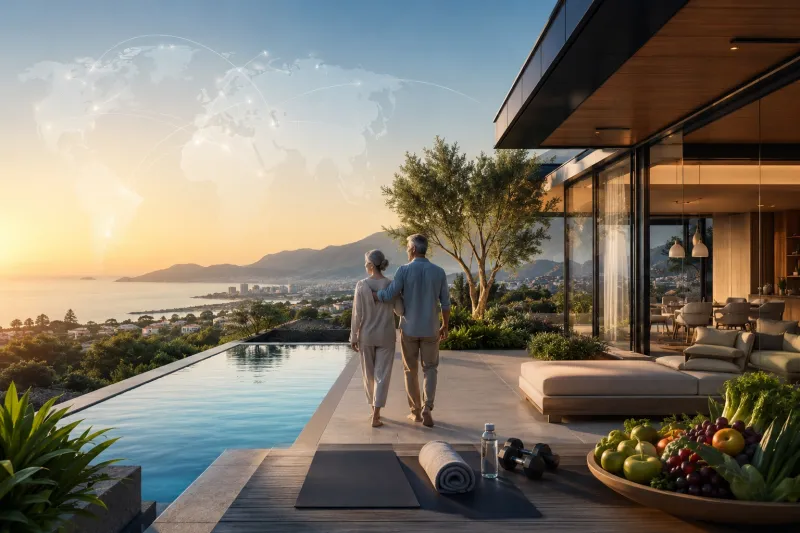
Longevity-led residences are moving beyond generic “wellness rooms” toward integrated, repeatable routines embedded in design. Architects and interior specialists are asked to choreograph day-to-night living: sunrise light exposure, hydration cues, movement prompts, recovery rituals, and sleep protection. Homes are planned around frictionless healthy behaviors where the easiest choice is also the best one. In practice, that means dedicated zones for training and recovery, kitchens optimized for clean nutrition, and layouts that reduce stress through intuitive flow and sensory calm.
- Sleep-first planning with quiet bedroom placement, blackout strategy, and temperature zoning
- Movement-friendly circulation (stairs that invite use, indoor-outdoor loops, compact training zones)
- Recovery infrastructure, such as sauna/cold plunge, red-light therapy nooks, and stretching areas
Preventative health amenities redefine what “full service” means
In top-tier buildings and branded communities, the most compelling amenity stacks now resemble boutique longevity clinics. Rather than focusing solely on spas and concierge services, developers are partnering with medical and performance brands to deliver preventative services on-site or on-demand. The result is a new version of “full service” where diagnostics, coaching, and recovery are available with the same convenience as valet parking. Buyers increasingly value buildings that can support consistent care because longevity outcomes are tied to adherence, not occasional indulgence.
Common inclusions in 2026:
- Biomarker testing rooms and visiting clinician suites
- Evidence-led fitness: strength labs, VO2 testing, mobility studios
- Thermal circuits: sauna, steam, cold exposure with safe protocols
- Nutrition support: chef programs, clean pantry sourcing, supplement storage
Air, water, and light become measurable luxury specifications
Longevity-minded buyers increasingly ask for quantifiable indoor environmental performance. In 2026, developers who can document filtration standards, humidity control, and water purification are differentiating themselves in a crowded high-end market. Circadian lighting is also maturing from a design trend into a health-aligned specification, with lighting plans tuned to support morning alertness and evening wind-down. For brokers and sales teams, this introduces a more technical conversation one that rewards transparency, certifications, and ongoing monitoring.
Luxury is shifting from “looks good” to “performs well” in metrics such as:
- Particulate control and VOC reduction strategies
- Whole-home water filtration and mineral balancing
- Daylight optimization and glare management
- Quiet HVAC and acoustic treatment to protect sleep
Biophilic design evolves into climate-sheltered nature access
Nature access remains a cornerstone of wellness real estate, but in 2026, it is being reinterpreted through resilience and year-round usability. Buyers want greenery, coastal air, and trail networks, but they also want protection from heat spikes, pollution events, and extreme weather. This is driving demand for properties that deliver controlled nature: shaded outdoor rooms, filtered fresh-air systems, misting and cooling landscapes, and architecture that enables indoor-outdoor living without sacrificing comfort or safety. The most sought-after homes provide restorative environments that are dependable, not seasonal.
Longevity infrastructure accelerates demand for privacy and security
As health becomes a status asset, privacy around routines, data, and care teams becomes more valuable. High-profile buyers are seeking residences that can host discreet medical visits, training sessions, and recovery therapies without compromising security or daily life. This is influencing site planning (separate service access, dedicated staff routes), vertical circulation (private lifts), and digital security (protected wellness data, secure smart-home networks). In many prime markets, the premium is no longer just for seclusion it is for the ability to pursue longevity without exposure.
New hotspots rise where medicine, mobility, and lifestyle intersect
Longevity-led demand is reshaping destination preferences. Buyers are gravitating toward locations that combine excellent healthcare access, clean environments, and high-quality daily movement walkability, cycling infrastructure, water sports, and trail systems. The appeal is strongest where an owner can integrate preventative care into normal life, rather than treating health as a separate trip. This trend supports both global gateway cities with elite medical networks and lifestyle destinations that offer year-round outdoor training, low congestion, and wellness-forward hospitality.
What buyers increasingly screen for:
- Proximity to top hospitals and specialist clinics
- Low pollution, reliable water quality, and calmer soundscapes
- Safe streets for walking, running, and cycling
- Access to longevity communities and practitioner networks
Multi-residence portfolios are built around recovery seasons and circadian alignment
Among ultra-high-net-worth buyers, 2026 is seeing more deliberate multi-home strategies tied to performance and recovery. Instead of collecting properties for prestige alone, owners are curating a “longevity calendar”: one residence optimized for deep work and clinical access, another for outdoor conditioning, and a retreat home designed for sleep debt repayment and nervous system downshifting. Climate, altitude, and light exposure patterns play a growing role in these decisions, as buyers align travel and residence use with their bodies rather than business tradition.
Developers monetize longevity through services, memberships, and operating models
Longevity-focused living is also reshaping how luxury property is packaged and monetized. Beyond sales price, developers are building recurring revenue models tied to wellness operations: memberships for diagnostics, coaching subscriptions, on-call physiotherapy, and curated nutrition programs. The property becomes part residence, part health club, part preventative-care platform. For investors and owners, this shifts the conversation toward operational excellence because the perceived value depends on consistent service quality and the credibility of wellness partners.
Typical models include:
- Resident-only longevity clubs with tiered access
- Partnerships with established medical and performance brands
- On-site practitioners as part of the managed services stack
- Annual “health programming” calendars similar to hospitality programming
Resale value and due diligence now include wellness performance claims
As longevity features become more material to purchase decisions, they are also becoming more material to valuation, disclosure, and due diligence. Buyers want proof that advanced systems are maintained, calibrated, and safe, especially for water treatment, air filtration, thermal therapies, and smart sensors. Properties that can document maintenance histories, provide system specifications, and demonstrate performance over time are better positioned to defend premiums. Meanwhile, vague wellness claims without evidence risk being treated as decorative rather than valuable, pushing the market toward clearer standards, better documentation, and more rigorous operational discipline.
Writer focused on delivering informative, accessible content