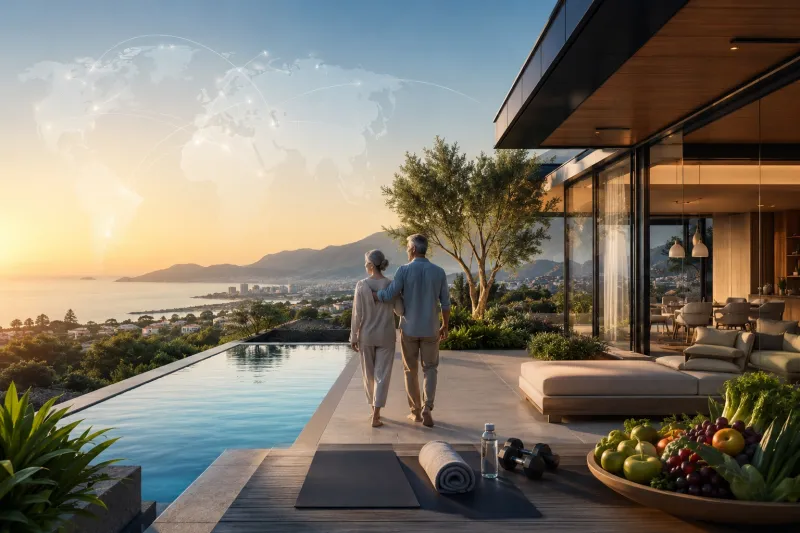
How longevity living is redefining luxury residential markets worldwide
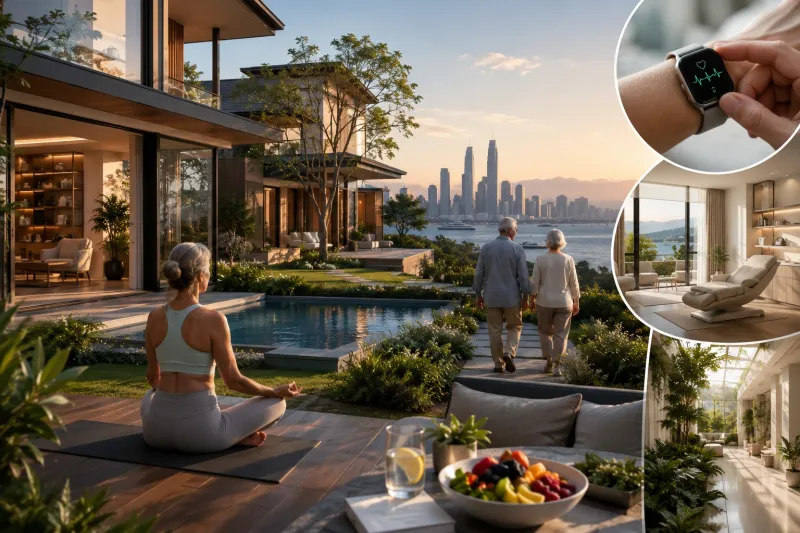
Luxury real estate is being reshaped by a new, health-driven aspiration: living longer, better, and with more independence. “Longevity living” goes beyond wellness spas and gym access; it influences where affluent buyers choose to live, how homes are designed, and which services are bundled into residential communities. From blue-zone-inspired developments to medically integrated residences, the premium is increasingly paid for time, vitality, and resilience—turning longevity into one of the strongest value drivers across global luxury markets.
- Longevity as a new driver of prime residential demand
- Wellness amenities evolve into longevity infrastructure
- Designing homes for healthspan, not just lifestyle
- Medical adjacency becomes a luxury differentiator
- The rise of longevity communities and club models
- Resort destinations reposition around health optimization
- Technology shifts from smart home to health intelligence
- Pricing premiums and new valuation logic in prime markets
- Regulatory and ethical considerations shape what is possible
- What luxury developers and brokers must adapt right now
Longevity as a new driver of prime residential demand
For decades, luxury value was anchored in location, views, architecture, and exclusivity. Today, an additional layer is becoming decisive: the promise of sustained physical and cognitive performance. High-net-worth buyers are prioritizing environments that reduce stress, support healthy routines, and provide rapid access to advanced care when needed. This demand is pushing top-tier markets to compete not only on lifestyle, but on measurable health outcomes, air quality, walkability, sleep-supportive design, and proximity to specialist medicine, making longevity a direct contributor to pricing power.
Wellness amenities evolve into longevity infrastructure
What used to be considered “nice-to-have” amenities, yoga studios, saunas, and massage rooms, are being upgraded into full longevity ecosystems. Developers are adding performance diagnostics, recovery suites, hydrotherapy, guided strength programs, and nutrition-focused kitchens. In many projects, these elements are managed with the same rigor as concierge and security, including specialist staffing and service-level agreements. The shift is subtle but meaningful: wellness is experiential, while longevity infrastructure is operational, repeatable, and designed to influence daily behavior over years.
- Assessment: baseline biometrics and ongoing monitoring
- Intervention: training, sleep optimization, stress reduction, and recovery
- Accountability: coaching, program design, and resident adherence support
Designing homes for healthspan, not just lifestyle
Longevity living is changing the physical product. Layouts favor stair visibility to promote movement, dedicated spaces for training or mindfulness, and lighting plans that align with circadian rhythms. Acoustic insulation and air filtration are treated as performance features rather than invisible building specs, while materials are selected for low-toxicity profiles. Even “aging in place” is being reframed: instead of overt accessibility cues, high-end homes integrate discreet universal design, wider passages, step-free transitions, and adaptable bathrooms so residents can maintain independence without sacrificing aesthetics.
Medical adjacency becomes a luxury differentiator
Proximity to elite healthcare has moved up the checklist, particularly in global cities and resort markets with seasonal populations. Buyers increasingly ask about access to specialist hospitals, concierge medicine, and rapid diagnostics, especially in regions where public systems are strained. Some developments partner with private clinics to offer on-site services, annual health screenings, and priority referrals. This creates a new form of “location premium”: not only near a financial district or beach, but near a trusted network of care that protects time and reduces uncertainty.
The rise of longevity communities and club models
Longevity is also social. Developers are packaging residences with membership-like benefits: curated programming, expert-led workshops, and community rituals designed to reinforce habit formation. These projects borrow from private clubs, integrating dining that supports metabolic health, events that reduce isolation, and spaces that encourage intergenerational interaction. The most successful models treat community design as a health intervention, recognizing that connection and purpose are as predictive of long-term wellbeing as any fitness facility.
Resort destinations reposition around health optimization
Luxury resort markets are pivoting from escapism to optimization. Buyers want second homes that do more than provide sun and scenery; they want environments that actively improve sleep, movement, and recovery. As a result, mountain, coastal, and countryside destinations are investing in year-round walkable planning, trail networks, thermal bathing culture, and high-quality food ecosystems. The best-performing destinations combine beauty with structure: the place makes healthy choices easy, frictionless, and socially reinforced.
Technology shifts from smart home to health intelligence
The smart home conversation is moving beyond automation toward health intelligence. Sensors track air quality, humidity, temperature, noise, and light exposure; some residences integrate sleep analytics and personalized lighting schedules. In premium developments, data is used to calibrate buildings for resident comfort and performance, not just convenience. This introduces new expectations around privacy, consent, and data stewardship issues that luxury brands must handle with transparency to maintain trust while delivering the promised longevity benefits.
Regulatory and ethical considerations shape what is possible
As residences incorporate diagnostics, medical services, and data-driven programs, developers must navigate complex regulations. Medical licensing, insurance boundaries, consumer health claims, and data protection rules vary widely across jurisdictions. Ethical questions also emerge: how to avoid exclusionary pricing that deepens inequality, how to market longevity without overpromising, and how to ensure residents understand what is evidence-based. The most resilient projects build governance into the business model, with clear clinical oversight, transparent privacy standards, and conservative claims that protect brand credibility.
What luxury developers and brokers must adapt right now
Longevity living demands a different playbook. Developers need to select partners who can operate health-oriented services at luxury standards, not just install amenities. Brokers must learn to translate technical features, filtration, lighting, acoustic design, and clinical partnerships into buyer-relevant outcomes without drifting into medical promises. Marketing must shift from glamour to proof: credentials, protocols, and resident experience design. Ultimately, longevity is becoming a durable competitive moat in high-end residential real estate, rewarding those who can deliver a credible, integrated, and consistently excellent health-forward lifestyle.
Writer focused on delivering informative, accessible content