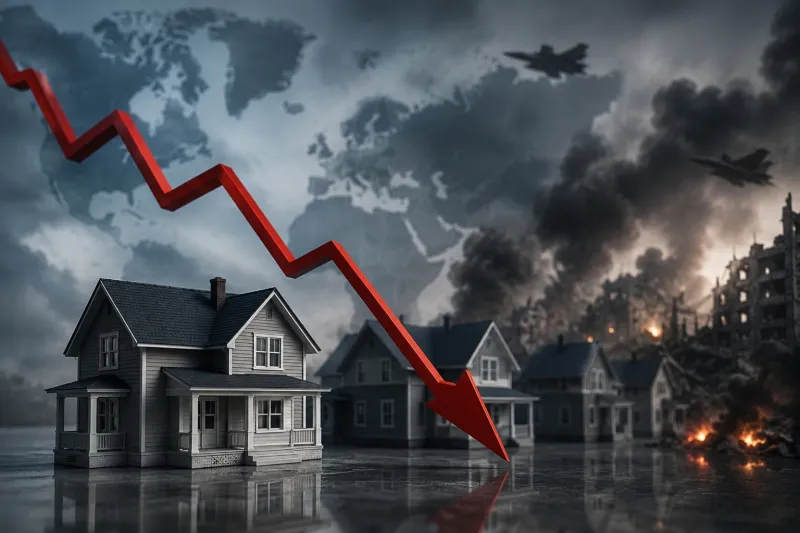

Prime real estate holds its ground as geopolitics reshapes global property markets
Global property markets are moving through a period defined by geopolitical uncertainty, shifting trade relationships, and uneven economic growth. Yet demand for prime real estate—assets with top locations, resilient income profiles, and strong tenant quality—remains notably durable. Investors and occupiers are adjusting how they price risk, where they deploy capital, and what “defensive” truly means, while cities and sectors with structural tailwinds continue to attract outsized interest.
- Geopolitical risk is being priced, not ignored
- Prime assets benefit from the flight to quality
- Capital flows are shifting toward perceived safe havens
- Supply constraints are supporting pricing in core locations
- Office markets are fragmenting, with prime outperforming
- Energy security and sustainability are now core underwriting factors
- Logistics and industrial real estate gains from supply-chain reconfiguration
- Currency moves and rate differentials are influencing deal activity
- Residential demand remains resilient where affordability and migration intersect
- Investors are structuring for resilience with active asset management
Geopolitical risk is being priced, not ignored
Rather than freezing activity, geopolitical volatility is increasingly being reflected in higher risk premia, tighter underwriting, and more conservative leverage. Cross-border buyers are favoring transparent legal systems, predictable planning regimes, and markets with deep liquidity, even if headline yields look less generous. In practice, this means more scrutiny on asset-level resilience: lease duration, tenant concentration, insurance coverage, and the ability to re-tenant quickly if demand shifts.
Prime assets benefit from the flight to quality
In uncertain environments, capital often migrates toward assets perceived as “best in class.” Prime offices with top sustainability credentials, well-located logistics facilities, and core residential in supply-constrained neighborhoods are drawing competitive bidding, even when secondary assets struggle to clear. This flight to quality is amplified by lenders who prefer financing properties with stable cash flows and robust exit liquidity, reinforcing a two-speed market where prime remains liquid and non-prime becomes harder to trade.
Capital flows are shifting toward perceived safe havens
Geopolitics is reshaping where money feels safe. Many institutions are prioritizing markets with strong property rights, dependable contract enforcement, and currency stability. While the definition of a haven varies by investor mandate, common features include:
- Regulatory predictability and clear tax regimes
- Depth of local buyer pools that support liquidity
- Infrastructure and talent that sustain long-term demand
As a result, some global cities are seeing persistent inflows even when macro indicators soften, while markets viewed as more exposed to political shocks face wider pricing discounts.
Supply constraints are supporting pricing in core locations
Across many major metros, development pipelines have been curtailed by higher financing costs, stricter planning standards, and construction inflation. That reduction in new supply is cushioning prime values, particularly where demand drivers remain intact. Prime residential is supported by limited land availability and long approval timelines; prime logistics benefits from scarce infill sites near consumption hubs; and top-tier retail in iconic corridors remains constrained by the simple fact that the best streets cannot be replicated.
Office markets are fragmenting, with prime outperforming
Office demand is not disappearing, but it is becoming more selective. Companies are consolidating footprints while paying premiums for buildings that help with recruitment, productivity, and brand. The strongest performance is concentrated in assets that combine location with high-quality amenities and strong environmental performance. Older stock with poor energy efficiency is facing higher vacancy and larger capex requirements, leading to pricing gaps that can be difficult to bridge without a clear repositioning plan.
Energy security and sustainability are now core underwriting factors
Energy market disruptions and evolving climate policies have made sustainability less of a “nice to have” and more of a cash-flow determinant. Investors are modeling the cost of decarbonization, potential obsolescence risk, and future tenant requirements. Buildings with strong energy performance and credible transition pathways are benefiting from better financing terms and higher tenant demand. Conversely, assets with uncertain upgrade feasibility may be discounted more aggressively as markets price in retrofit costs and regulatory compliance risk.
Logistics and industrial real estate gains from supply-chain reconfiguration
As companies diversify suppliers and re-balance inventories, industrial real estate continues to attract attention, especially near ports, rail hubs, and major population centers. “Nearshoring” and “friendshoring” strategies are supporting demand for modern facilities with strong power capacity and flexibility for automation. The most sought-after assets offer:
- Proximity to consumers for faster delivery
- Modern specifications (clear heights, dock ratios, yard depth)
- Resilience to disruptions through multi-modal connectivity
While rent growth may normalize in some markets, prime logistics remains positioned as a strategic infrastructure layer for trade and distribution.
Currency moves and rate differentials are influencing deal activity
Exchange-rate volatility is shaping cross-border returns and timing. A stronger buyer currency can create opportunistic windows, while funding costs and hedging expenses can quickly change the attractiveness of a target market. At the same time, divergent interest-rate paths are affecting cap rates and debt availability unevenly across regions. Many buyers are responding with lower leverage, more fixed-rate debt, and stricter interest coverage targets, particularly for assets where income growth is less certain.
Residential demand remains resilient where affordability and migration intersect
In many cities, housing demand is being underpinned by household formation, urban job growth, and migration flows even as affordability challenges intensify. Prime residential in global cities can behave defensively due to scarcity and international demand, while rental housing often benefits from higher mortgage rates pushing households toward leasing. Policy risk matters, however: rent regulation, taxation changes, and planning interventions can materially affect returns, making market selection and local expertise crucial.
Investors are structuring for resilience with active asset management
With uncertainty elevated, investors are leaning into strategies that emphasize control and adaptability. This includes building larger capex reserves, negotiating stronger lease covenants, and prioritizing properties with optionality such as mixed-use potential or conversion pathways. Portfolio construction is also evolving, with more attention to diversification across geography, tenant industries, and income types. In many cases, the question is no longer whether an asset is prime today, but whether it can remain prime as regulation, technology, and geopolitical dynamics continue to reshape demand.
Writer focused on delivering informative, accessible content