
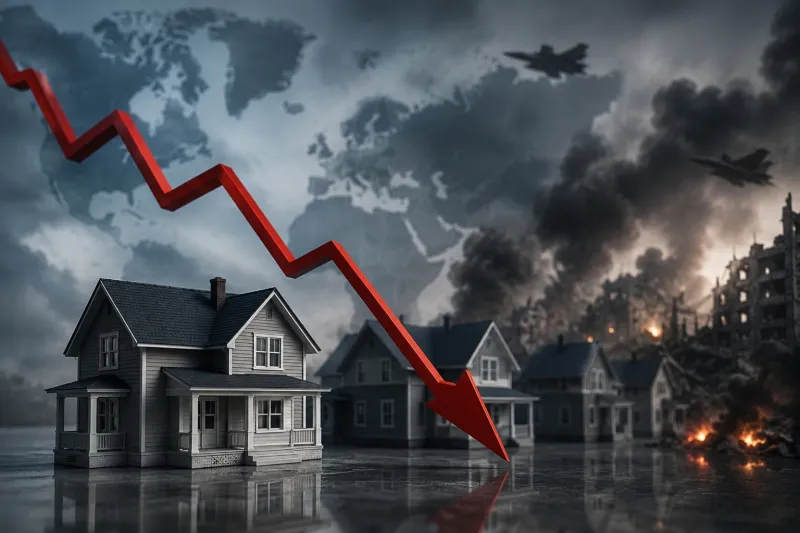
Property prices edge lower as geopolitics chills buyers and demand weakens
Property markets are showing early signs of downward pressure as geopolitical tensions raise uncertainty and buyers step back. While the scale of price declines remains modest in many regions, the shift in sentiment is clear: fewer view real estate as a near-term “can’t miss” asset, and more are prioritizing liquidity, job security, and flexibility. The result is a market where sellers face longer timelines, negotiations are tougher, and price discovery is happening in real time.
- A cautious turn in pricing momentum
- Geopolitical tensions reshape buyer confidence
- Weakening demand is visible in activity data
- Higher financing costs amplify the slowdown
- Sellers adjust strategies as negotiation returns
- Regional divergence widens as local fundamentals matter
- Investors become more selective and yield-driven
- New-build markets feel pressure through incentives
- Currency swings and inflation expectations complicate decisions
- What buyers and sellers watch next in a shifting market
A cautious turn in pricing momentum
After years of resilient gains, pricing momentum is softening across multiple segments. In many cities, headline prices are edging lower rather than collapsing, reflecting a slow recalibration between what sellers want and what buyers are willing to pay. Discounting is returning in the form of price cuts on listings, negotiated concessions, and seller-paid closing costs, even when official indices still appear stable due to reporting lags.
This “grind lower” dynamic often emerges when demand weakens faster than supply can adjust. Listings may not surge dramatically, but transaction volumes fall, and the marginal buyer becomes more price-sensitive. Markets with a high share of discretionary purchases, such as second homes or investment units, tend to feel the change first.
Geopolitical tensions reshape buyer confidence
Geopolitical friction affects housing through confidence and expectations. Households postpone big commitments when conflict risks, trade disputes, sanctions, or diplomatic breakdowns dominate news cycles. Uncertainty acts like a tax on decision-making, pushing people to rent longer, renew leases, or wait for clearer signals.
In globally connected markets, geopolitical stress can also influence capital flows. Cross-border buyers may face tighter compliance checks, currency volatility, or changing visa and residency rules. The combined effect is fewer active bidders, which reduces competitive pressure on prices, especially in premium neighborhoods where international demand previously provided a floor.
Weakening demand is visible in activity data
Even where prices haven’t moved much yet, demand weakness shows up in leading indicators. Agents report fewer viewings per listing, lower click-through rates on portals, and a decline in multiple-offer situations. Time-on-market is extending, and properties that would have sold quickly now require refreshed photos, re-listings, or staged price reductions.
Developers and lenders also monitor reservation rates, mortgage applications, and pre-approval volumes. When these metrics soften, it signals that the buyer pipeline is thinning. Lower volume often precedes lower prices because sellers eventually adjust to the reduced pool of qualified, motivated buyers.
Higher financing costs amplify the slowdown
Financing conditions remain central to affordability. When mortgage rates rise or credit standards tighten, buyers can afford less house for the same monthly payment. This constraint directly pressures prices, particularly in markets that were already stretched relative to incomes.
Even if rates stabilize, the “payment shock” compared with recent years changes behavior. Many buyers are recalculating not only the monthly cost but also the opportunity cost of tying up cash at a time when safer assets may offer more attractive yields. Affordability ceilings become harder, more visible limits, reducing the room for sellers to hold firm on aspirational pricing.
Sellers adjust strategies as negotiation returns
As demand cools, sellers are shifting from “list and wait” to more active pricing and marketing. The initial list price matters more now because fewer buyers are browsing casually; they are filtering strictly by budget and value. Overpricing leads to stagnation, and stagnation invites deeper discounts.
Negotiation has returned in practical forms:
- Price reductions after the first week on the market
- Seller contributions to closing costs or mortgage rate buydowns
- Flexibility on inspection findings and repair credits
- Inclusion of furnishings or appliances to sweeten offers
These adjustments can keep deal flow moving without always showing up immediately in headline price indices.
Regional divergence widens as local fundamentals matter
Not all markets react equally. Locations with diversified employment, constrained supply, and strong household formation can remain relatively resilient, while areas dependent on a narrow set of industries or speculative investor demand may see faster declines. Local labor markets, wage growth, and migration patterns increasingly determine outcomes.
Geopolitical tension can also create uneven effects by region. Defense, energy, and logistics hubs may experience pockets of stability or even increased activity, while markets tied closely to international tourism, luxury demand, or export-driven sectors may soften more. The result is a patchwork: modest declines in some cities, flat pricing in others, and sharper corrections where prior gains were most stretched.
Investors become more selective and yield-driven
Investor psychology is changing from appreciation-first to income-first. When price growth is uncertain and financing costs are higher, investors focus on whether rents cover expenses and deliver a competitive yield. That shift reduces enthusiasm for marginal deals and compresses the pool of bidders for properties that relied on future appreciation to justify the price.
In this environment, investors tend to prioritize:
- Prime locations with stable tenant demand
- Assets with manageable maintenance and predictable operating costs
- Properties that can be improved efficiently to raise rents
- Markets with landlord-friendly regulation and low vacancy risk
Where rent growth slows, or regulation increases uncertainty, investor demand can retreat quickly, removing a key source of support for prices.
New-build markets feel pressure through incentives
Developers often defend headline prices to protect valuations and lender covenants, but they may offer incentives that effectively lower the transaction price. These can include upgraded finishes, free parking, service-charge holidays, or subsidized mortgage rates. While this keeps published pricing steadier, it signals that demand is not absorbing supply at previous levels.
Where project pipelines are large, the risk increases that unsold inventory accumulates. Developers may slow launches, phase construction, or renegotiate land deals. Incentive-led selling can be an early indicator of a broader market repricing, especially if resale properties begin to compete more aggressively on price and flexibility.
Currency swings and inflation expectations complicate decisions
Currency volatility, often heightened during geopolitical stress, can either stimulate or suppress demand depending on the direction of movement. A weaker local currency can attract foreign buyers seeking relative value, while also raising imported construction costs. Conversely, a stronger currency can reduce inbound demand and make local property less attractive compared with alternatives abroad.
Inflation expectations add another layer. If households expect inflation to fall and real incomes to stabilize, they may wait for better financing conditions or improved affordability. If they fear persistent inflation, some may still view property as a partial hedge, but only at the right price. Expectations are fragmenting, which leads to slower transactions as buyers and sellers anchor to different future scenarios.
What buyers and sellers watch next in a shifting market
As prices edge lower, participants are focusing on a tighter set of signals to gauge where the market is headed. For buyers, the key question is whether current discounts are temporary negotiating room or the beginning of a deeper repricing. For sellers, the focus is on how quickly demand returns once uncertainty eases or whether a slower period becomes the new normal.
Common indicators to monitor include:
- Days on market and the share of listings with price cuts
- Mortgage approval rates and changes in lending standards
- Local employment trends and redundancy announcements
- Rent growth versus ownership costs in the same neighborhoods
- New listing volumes and developer incentive intensity
In a market defined by geopolitics and weakening demand, the balance of power can shift quickly, making timely, data-driven decisions more important than broad narratives.
Writer focused on delivering informative, accessible content